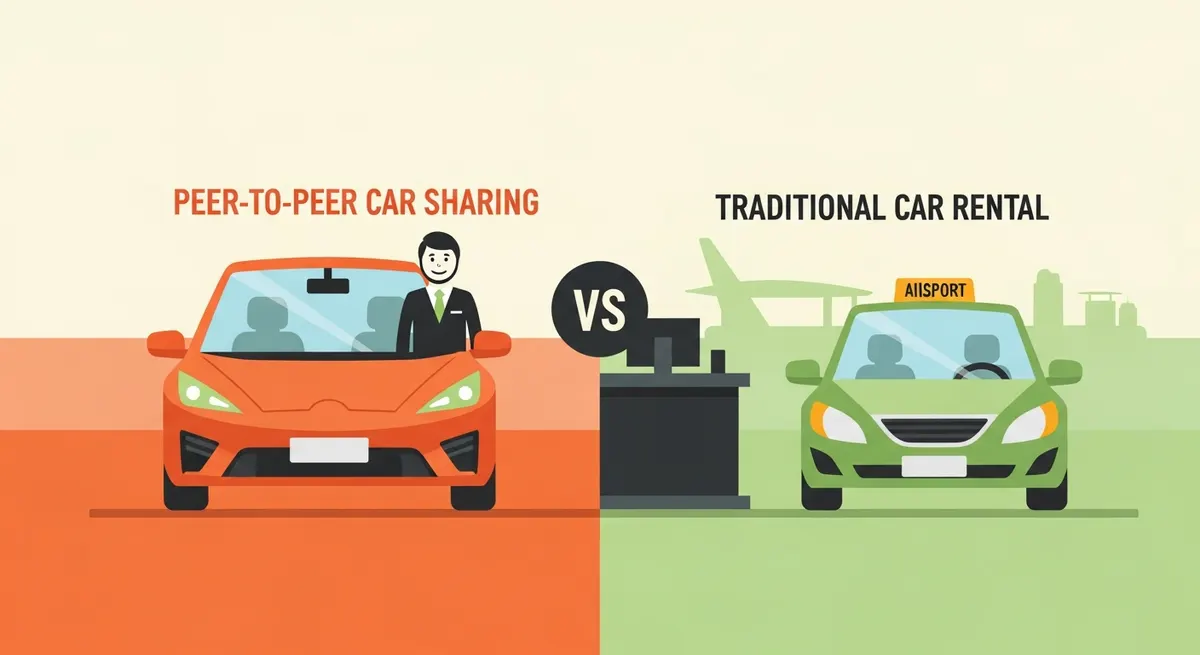
Every Turo trip comes with some baseline third-party liability coverage. The protection plan you pick at checkout mostly determines how much you could owe for damage to the host's car. Your own auto policy or credit card often will not substitute for that plan on a peer-to-peer rental, so check before you rely on either. This guide explains each layer of coverage, where each commonly falls short, and how to choose.
One caution up front, repeated throughout: plan names, tiers, deductibles, limits, and what's included by default change often and differ by location, renter profile, and vehicle. Verify current details at checkout on Turo, read your own policy and card terms, and call your insurer or card issuer with specific questions. Every dollar figure below is illustrative, not a published limit.
How Coverage Layers on a Turo Trip
Three layers can apply, and they answer different questions.
Third-party liability is coverage for injury or property damage you cause to other people or their property. Some baseline of this typically comes with the booking, but the amounts and terms vary by location, so confirm them at checkout.
Damage to the host's car is the part most renters worry about. The protection plan you choose at checkout largely sets your financial exposure here.
Your own coverage (a personal auto policy or a credit card benefit) may or may not respond on top of, or instead of, the plan. For peer-to-peer rentals, the answer is often "not the way you'd expect."
Understanding which layer pays for what is the whole game. A claim can involve all three at once: the host's car is damaged (plan), another driver is hurt (liability), and your own insurer or card is asked to reimburse you (maybe).
How Protection Plan Tiers Generally Work
Plans generally come in a range:
- A higher-cost option with low or zero damage responsibility for you.
- Mid-tier options that cost less per day and leave you responsible for a moderate amount.
- A minimal option that costs least and leaves a higher maximum responsibility with you.
Damage responsibility is the most you could owe for damage to the host's vehicle under a given plan. A deductible, or out-of-pocket maximum, is the amount you pay before the plan responds. In practice, the cheaper the plan, the more you carry if something happens.
Illustrative only: if a minimal plan leaves you exposed to a few thousand dollars and a mid-tier plan caps you at a few hundred, the daily price difference buys a large reduction in worst-case exposure. Compare the daily cost against the exposure, not against the headline price.
What Plans Typically Do Not Cover
Read the exclusions list, because this is where people are surprised. Common categories include:
- Personal belongings left in the car.
- Tolls, tickets, and fines.
- Smoking, pet, or excessive cleaning fees.
- Mechanical misuse, such as using the wrong fuel or ignoring warning lights.
- Violations of trip terms, such as driving where the listing prohibits it.
- Unauthorized drivers.
- Excess mileage charges.
- Loss of use, which is the host's lost rental income while the car is being repaired. How it's treated varies by plan and situation, so check.
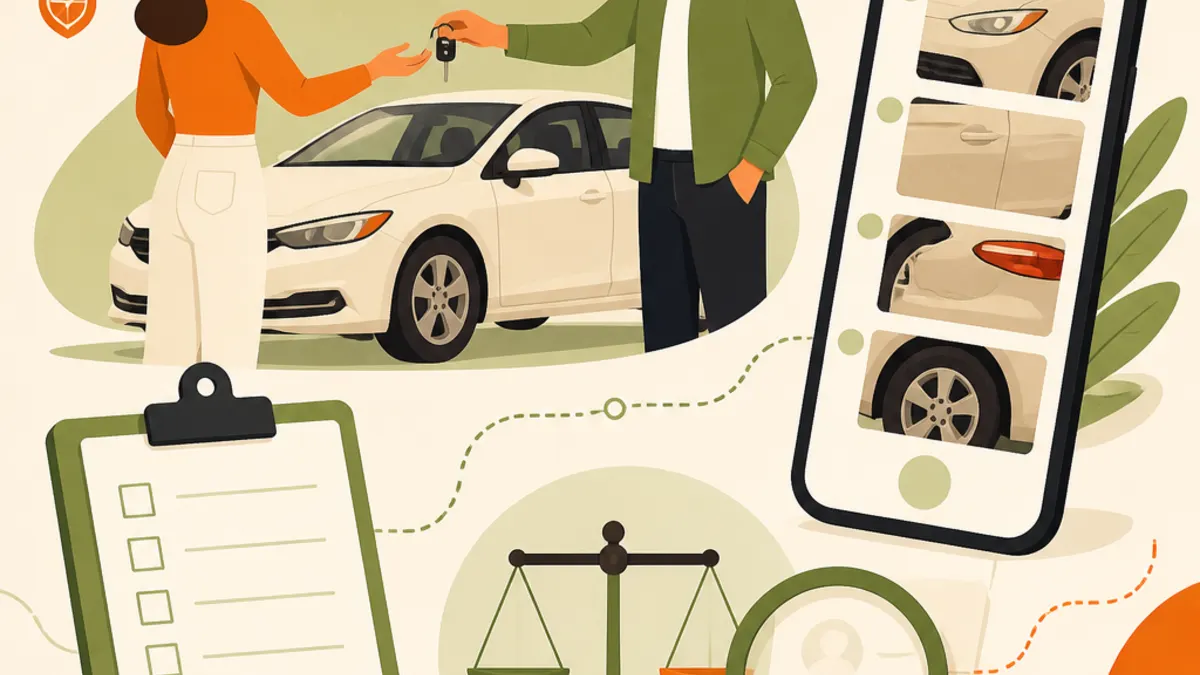
From the host side, here is how claims tend to unfold. Hosts photograph the car at handoff and again at return. If something is different, they report damage with those photos, and may add claims for cleaning or lost income during repairs. Those add-on charges are the ones renters often don't anticipate, and they are exactly what the exclusions language addresses.
Does Your Personal Auto Policy Extend to a Peer-to-Peer Rental?
Often not. Common reasons:
- Car-sharing exclusions. Some policies explicitly exclude vehicles rented through peer-to-peer platforms.
- Rented-vehicle limits. Coverage that extends to traditional rental companies may not extend to a platform rental.
- Liability versus physical damage. Your policy may cover liability but not damage to the car you're driving, or vice versa.
- Primary versus secondary coverage. Primary coverage pays first. Secondary coverage pays only what's left after another source pays, so a secondary benefit may do little if the plan already responds.
Don't assume. Call your insurer and ask a specific question: "Does my policy cover physical damage and liability for a car rented through a peer-to-peer platform like Turo, and is it primary?" Get the answer in writing if you can.
Do Credit Card Rental Benefits Apply?
Sometimes, but peer-to-peer rentals are a frequent exclusion. Typical limits include:
- Exclusion of peer-to-peer or car-sharing platforms.
- Exclusion of exotic, luxury, or high-value vehicles.
- Caps on rental length.
- A requirement to pay for the entire rental with that card and to decline other coverage.
- Benefits that are secondary, not primary.
Don't assume your card covers a Turo trip because it covers rentals at a counter. Read the benefits document, or call the issuer and ask directly. Confirm terms in writing before relying on it. Note that declining a protection plan to rely on a card that turns out not to apply can leave you fully exposed.
How to Decide: A Practical Framework
Three factors drive the choice.
Value of the car. The more expensive the vehicle, the larger the possible claim, and the more the plan's cap is worth.
Length of the trip. Longer trips mean more time on the road and more chance of an incident, though the plan cost also grows.
Your own financial exposure. Could you absorb the maximum responsibility under the cheapest plan without hardship? If not, buy more protection.
A simple approach: (1) find out what your own policy and card truly cover, in writing; (2) compare each plan's maximum responsibility against what you could afford to pay; (3) if you can't confirm outside coverage, choose a more protective plan. Confirm the details at checkout since they change. For how plans interact with trip cost, see is Turo cheaper than renting a car.
Before the Trip and After an Incident
Before the trip: review the listing's protection options, and at pickup photograph and video every exterior panel and the interior, plus odometer and fuel gauge, timestamped. Note existing damage. Doing this protects you from being blamed for damage that predates you.
After an incident: stay safe, document the scene, report it promptly through the platform's claims flow, and keep records and messages in the app. The Turo renter damage claims process walks through what happens next, and the how to rent a car on Turo guide covers the full booking flow. For airport handoffs, see the Turo airport pickup renter guide.
Worked Scenario One: A Weekend in an Economy Car
Illustrative numbers only. A renter takes a three-day trip in an economy car and compares the minimal plan against a mid-tier plan.
The minimal plan costs less per day but leaves a higher maximum responsibility, say a couple thousand dollars. The mid-tier plan costs a bit more per day and caps exposure at a few hundred. Over three days the price difference may be modest.
If the renter could comfortably absorb the higher number and has confirmed outside coverage, the minimal plan may be reasonable. If a surprise bill of that size would hurt, the mid-tier plan is cheap insurance against a bad day. The right answer depends on the renter's finances and confirmed coverage, not on the lowest daily price.
Worked Scenario Two: A Week in a Higher-Value Car
Illustrative numbers only. A week-long trip in a high-value car changes the math.
Exposure scales with the car's value, so the gap between plans widens: a minimal plan may leave the renter responsible for a much larger amount. The daily price difference is also larger, but so is what it protects against. Credit cards and personal policies are also more likely to exclude high-value vehicles. For this kind of rental, the Turo luxury car rental guide covers deposits and requirements, and a more protective plan is usually worth strong consideration.
Worked Scenario Three: The Credit Card That Didn't Apply
Illustrative numbers only. A renter declines all protection, assuming their credit card covers rentals. A minor parking-lot scrape leads the host to file a damage claim for a few hundred dollars.
The renter files with the card issuer and learns the benefit excludes peer-to-peer platform rentals. With no plan in place, the renter pays the claim out of pocket, and the host may also add a charge for the days the car was in the shop.
The lesson: the exclusion existed in the card terms all along. A five-minute call before booking would have revealed it. Even a small claim becomes expensive when no layer responds.
Comparison of the Three Coverage Sources
Turo protection plan. Damage to the host's car up to your plan's responsibility limit, plus baseline liability. Personal items, tolls, cleaning, misuse, unauthorized drivers, excess mileage. Turo, through the claims flow. Renters who can't confirm other coverage, or anyone wanting a clear cap Personal auto policy. Possibly liability and sometimes physical damage, depending on policy. Car-sharing and platform rentals are a common exclusion. Your insurer. Renters whose insurer has confirmed in writing it applies Credit card benefit. Possibly damage or theft of a rental, often secondary. Peer-to-peer platforms, exotic or luxury cars, long rentals. The card issuer. Renters who've confirmed the terms and paid with that card
Verify all of this against current plan details and your own documents.
Pre-Booking Checklist
- Check the plan options on the listing and note each plan's maximum responsibility.
- Call your auto insurer with the specific peer-to-peer question and ask whether coverage is primary.
- Confirm the card benefit terms in writing and check exclusions.
- Decide your maximum tolerable out-of-pocket amount.
- Choose the plan that fits the car's value, trip length, and your exposure.
- Photograph and video the car at pickup, with timestamps, including odometer and fuel.
If you're considering a standalone non-owner or rental-reimbursement policy, or travel insurance for the trip, compare these as categories, check what they exclude for peer-to-peer rentals, and confirm terms before relying on them.
Common Mistakes
Declining all protection because a card "covers rentals." Peer-to-peer is a frequent exclusion.
Assuming a personal policy transfers. Often it doesn't.
Skipping pickup photos. You lose your best defense.
Not reading the exclusions list. Loss of use, cleaning, and tolls surprise people.
Ignoring age and eligibility rules. See Turo renter age requirements since they can affect which options are available.
Who May Want the Most Protective Plan Regardless
A first-time Turo renter who can't confirm existing coverage, or anyone renting a high-value car, may reasonably choose the most protective plan regardless of other coverage. The extra cost buys certainty, and there is no gap to discover afterward.
Frequently Asked Questions
If I decline the top plan, what happens if a third party hits the car while it's parked?
It depends on the plan's terms and the circumstances, so check what each plan says about damage not caused by you. Don't assume a parked-car incident is automatically free of responsibility. Document it immediately and report it through the platform.
Am I responsible for damage that happened before pickup but wasn't documented?
You can be disputed on it, which is why pickup photos matter. A timestamped record showing the damage was already there is your best evidence. Without it, you're relying on memory.
How does coverage work when I add a second driver?
Unauthorized drivers are a common exclusion, so add any other driver through the platform before the trip and check how the plan treats them. Verify current terms at checkout.
Does my personal policy's liability coverage help if I hurt someone?
Possibly, but peer-to-peer exclusions may apply. Ask your insurer directly. The baseline third-party liability that comes with the booking is the layer designed for this, so confirm its terms at checkout.
What is loss of use?
It is the host's lost rental income while their car is being repaired. How it's handled depends on the plan and facts, so read the plan details and ask.
What if I rent often?
Running the numbers per trip is tedious. Some frequent renters price a standalone policy against per-trip plans, but check that it covers peer-to-peer rentals first.
Does a higher-priced plan remove the need to take photos?
No. Photos establish whether a claim is valid at all, regardless of plan.
Who do I file with if damage happens?
Report through the Turo claims flow first. Then notify your own insurer or card issuer if you plan to rely on them, and keep every record.
The Takeaway
The right Turo renter insurance guide answer is to check, not assume. Know the three layers, read the exclusions, confirm in writing whether your auto policy or card applies, and choose a protection plan based on the car's value and the amount you could afford to pay. Verify current plan details at checkout on Turo before you book.
One last note: renters who book often sometimes end up listing a car of their own, and the host side of insurance works differently. If you're curious, Turo fleet insurance for hosts is where that side of SharingShell begins.