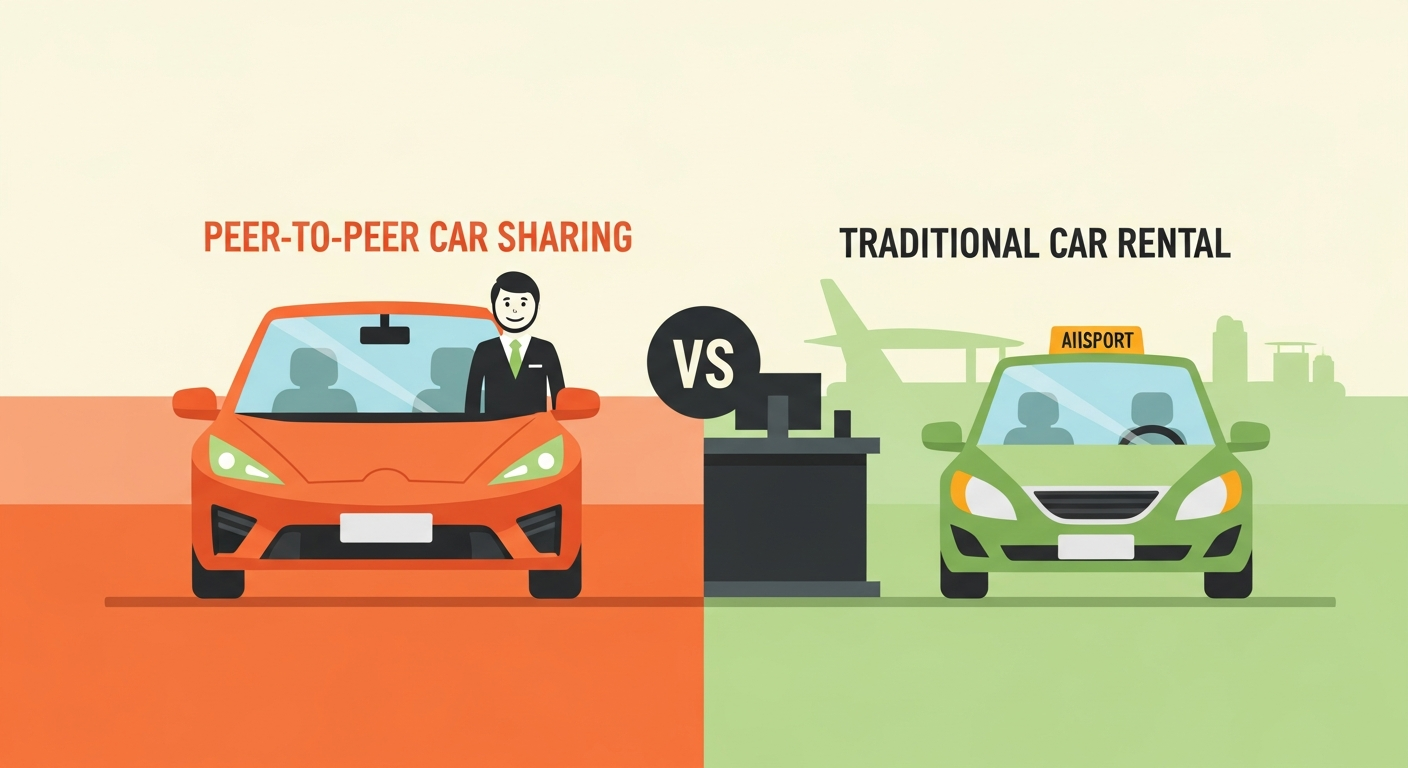
Is Turo cheaper than renting a car? Sometimes — it depends heavily on trip length, location, and which protection plan you add. Turo tends to win on longer trips, off-airport pickups, and unusual vehicle types, while traditional rental companies often win on last-minute bookings, one-way trips, and certain insurance situations. This guide breaks down exactly how each option's cost is actually structured so you can tell which one wins for your specific trip.
If you're new to it: Turo is a peer-to-peer car rental marketplace where you rent a vehicle from an individual owner rather than a rental company counter. That difference is the source of both its cost advantages and its quirks, which is what this comparison unpacks.
How Turo's Total Cost Is Actually Structured
Turo's advertised daily rate is rarely what you actually pay. The total is built from several components, and understanding them is the key to knowing whether a given booking is a good deal.
Base rate (host-set). Unlike a rental company with centralized pricing, each Turo vehicle is priced by its individual owner (the host). This is why two nearly identical cars in the same city can be priced very differently — one host might price aggressively to keep their car booked, another might price high during a local event. Some hosts use automated pricing tools that adjust daily based on demand, which is why a car's price can change between the day you browse and the day you book.
Trip fee. A trip fee is a service charge Turo adds on top of the host's rate, calculated as a percentage of the trip cost. It varies based on factors like trip length and vehicle value, and it's not always obvious until you reach checkout — generally, longer trips carry a proportionally lower trip fee, which is part of why Turo tends to get more cost-competitive the longer you rent.
Protection plan add-ons. Turo offers tiered protection plans (its version of rental insurance), where higher tiers cost more per day but reduce your financial responsibility if something goes wrong. Protection plan tiers are the single biggest swing factor in Turo's total cost — the same car can cost dramatically more or less per day depending on which tier you choose, and the cheapest tier often carries a high deductible that renters overlook.
Other add-ons. Delivery, unlimited mileage, additional drivers, and prepaid refueling all add to the total if selected.
The practical takeaway: judge a Turo booking by its all-in checkout total including your chosen protection tier, not the headline daily rate. The gap between the two is often substantial.
How Traditional Rental Car Pricing Is Structured
Traditional rental pricing is more centralized but has its own hidden layers.
Base rate. Set by the company, varying by location, demand, and how far ahead you book. Airport locations frequently cost more due to added concession fees passed to the renter.
Taxes and airport fees. These can add a meaningful percentage to the base rate, especially at airport counters, and are often the reason the final price exceeds the advertised one.
Insurance / damage waivers. Optional coverage sold at the counter, which can add substantially to the daily rate — though many renters are already covered through a personal auto policy or credit card benefit, making this an area where declining coverage you already have saves real money.
Young renter and additional driver fees. Renters under a certain age often pay a daily surcharge, and additional drivers usually cost extra.
The main advantage here is predictability and infrastructure: standardized pickup, large fleets, and easy one-way rentals between locations.
A Realistic Side-by-Side Cost Scenario
Consider a hypothetical three-day rental of a standard mid-size car in a mid-demand city, booked about a week ahead. The figures below are illustrative of how the cost structures compare — not current quoted prices, which vary by market, vehicle, host, and date, and should always be verified at booking.
Base rate. Turo: host-set, varies significantly between listings. Traditional rental: company-set, more consistent.
Service/trip fee. Turo: trip fee added at checkout, proportionally lower on longer trips. Traditional rental: rolled into base rate.
Taxes / airport fees. Turo: lower off-airport; airport delivery may add a fee. Traditional rental: often higher, especially at airport counters.
Protection / insurance. Turo: tiered plans, wide cost range by tier chosen. Traditional rental: optional counter waivers, or use existing coverage.
Deposit / hold. Turo: a deposit hold may apply on some cars. Traditional rental: hold placed on card, amount varies.
Cancellation. Turo: host- and timing-dependent policy. Traditional rental: often flexible up to pickup, varies by rate type.
The pattern this reveals: Turo's advantage grows on longer, off-airport trips where the trip fee is proportionally smaller and you avoid airport concession fees. Traditional rentals stay competitive on short, airport-based, or last-minute trips where Turo's host pricing and protection tiers can push the total up.
Where Turo Tends to Come Out Cheaper
Longer trips. The trip fee is proportionally lower on longer rentals, and some hosts offer weekly or monthly discounts, so multi-day and multi-week trips often favor Turo.
Off-airport pickups. Avoiding airport concession fees and taxes can make a meaningful difference. If you can pick up a car away from the airport, Turo frequently wins on total cost.
Unusual or specific vehicle types. If you want a specific make, a truck, a convertible, or an EV, Turo's individually-owned inventory often prices these better than a rental company's specialty tier — and the selection is usually wider.
When you already have coverage. If your personal auto policy or credit card already extends to Turo rentals, you may be able to choose a lower protection tier and cut the total significantly.
Where a Traditional Rental Company Tends to Win
An honest comparison has to be clear about this: Turo does not always win.
Last-minute rentals. Traditional companies hold large fleets and can absorb last-minute demand at a counter. Turo's last-minute availability is thinner and host pricing can spike, so a same-day booking often favors a rental company.
One-way trips. Traditional companies are built for one-way rentals between locations. Turo one-way rental options exist but are far more limited and often costlier, since the car has to return to its host. If you need to drop off in a different city, a rental company usually wins.
Certain insurance situations. If you don't have personal coverage that extends to Turo and need full protection, Turo's higher protection tiers can erase its price advantage — sometimes making a traditional rental with an existing credit card benefit cheaper overall.
Predictable, standardized pickup. At an airport counter, the process is uniform. On Turo, pickup depends on coordinating with an individual host, which is occasionally less convenient even when cheaper.
What Renters Commonly Overlook
Insurance overlap. Many renters pay for a protection plan on Turo or a damage waiver at a rental counter that duplicates coverage they already have through a personal auto policy or credit card. Confirming your existing coverage before booking is the single highest-value step for cutting cost on either option.
Deposit holds. Some Turo cars place a deposit hold — a temporary hold on your card released after the trip — which doesn't affect final cost but does tie up funds. Rental companies do this too, but the amount and timing vary.
Cancellation policies. Turo cancellation terms are set partly by the host and depend on how far ahead you cancel, so they're less uniform than a rental company's. Read the specific policy before booking.
Age requirements. Turo renter age requirements and rental company young-driver surcharges both apply below certain ages, and they don't always line up — worth checking which is more favorable for younger renters.
The damage claims process. If something goes wrong, the Turo renter damage claims process runs through the platform and the host, which differs from a rental company's counter-based process. Neither is necessarily worse, but they're different enough to understand before you book.
Frequently Asked Questions
Is Turo always cheaper than a rental car company?
No. Turo tends to be cheaper on longer trips, off-airport pickups, and specialty vehicles, but traditional rentals often win on last-minute bookings, one-way trips, and situations where you'd need Turo's higher protection tiers. Always compare the all-in total for your specific trip.
Why do Turo prices vary so much between similar cars?
Because each car is priced by its individual host, not a central system. Some hosts price aggressively to stay booked, others price high during local demand spikes, and many use automated tools that change prices daily. This is why comparing several listings for the same trip is worth the effort.
Does Turo include insurance, or do I pay extra?
Turo offers tiered protection plans at an added daily cost, with higher tiers reducing your financial responsibility. The cheapest tier often carries a high deductible. If your personal auto policy or credit card already covers Turo rentals, you may be able to choose a lower tier and save.
Is Turo good for one-way trips?
Generally less so than a traditional rental company. Turo one-way rental options are limited and often more expensive, since the vehicle needs to return to its host. For cross-city drop-offs, a rental company is usually the better fit.
What hidden costs should I watch for on Turo?
The trip fee added at checkout, the protection plan tier you select, and any add-ons like delivery or unlimited mileage. Judge the booking by its all-in total, not the advertised daily rate, and verify all figures at the time of booking since they vary by market, host, and date.
The Takeaway
So, is Turo cheaper than renting a car? For longer trips, off-airport pickups, and specific vehicle types, it frequently is — but traditional rental companies still win on last-minute, one-way, and certain insurance scenarios, so the honest answer is to compare the all-in total for your exact trip rather than assuming either option is always cheaper.
One last note worth mentioning: a fair number of people who start out comparing Turo costs as renters eventually look at it from the other side, since the same host-set pricing that creates these deals is also what makes Turo work as a business. If that curiosity ever strikes, our guide to Turo fleet management software is where the operator side of SharingShell begins.