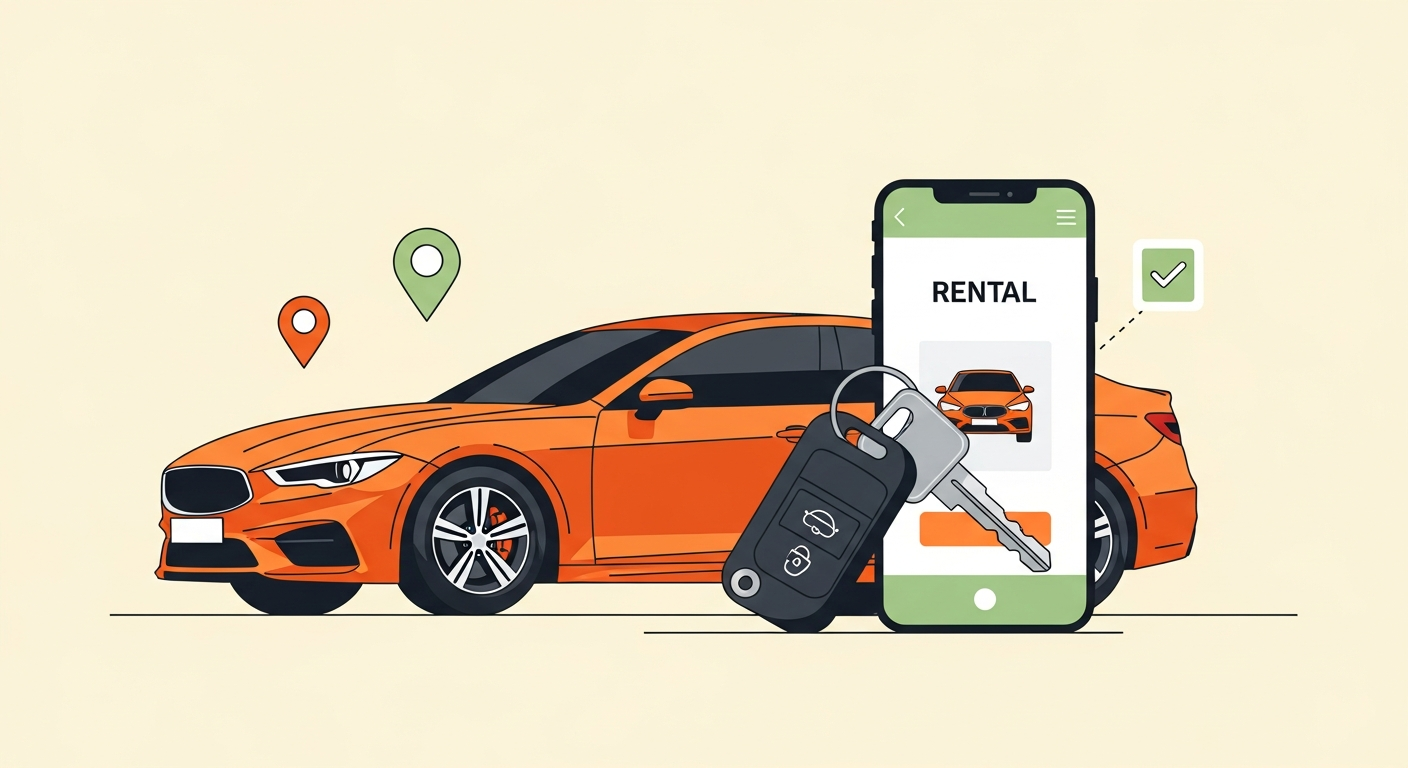
Renting a car on Turo for the first time is simpler than it looks, but because you're booking from an individual owner rather than a rental counter, a few things work differently — and knowing them upfront makes the whole experience smoother. This guide walks you through the entire process: setting up your account, finding the right car, checking a listing before you book, handling pickup, and knowing what to do if something goes wrong. By the end, you'll book with confidence instead of second-guessing.
|||
If it's completely new to you: Turo is a peer-to-peer car rental marketplace, meaning you rent a vehicle directly from its owner (the host) rather than from a company. The process end to end: create and verify an account, search and filter for a car, vet the listing and host, book, pick up or receive delivery, and return it. Here's each step in detail. Note that specific fees and verification requirements vary by market, so confirm the current details when you book.
|||
Setting Up and Verifying Your Account
|||
Before you can book, you'll create an account and go through host verification — the platform's identity check confirming you're a legitimate renter (despite the name, it applies to renters too). This typically involves providing your driver's license and some basic personal information, and the platform may take a little time to approve it.
|||
Do this first, before you've found the perfect car. Verification isn't always instant, and there's nothing more frustrating than finding an ideal vehicle for a specific date only to miss it because your account isn't approved yet. Getting verified early means you can book the moment you're ready.
|||
Age matters here too. Turo has minimum age requirements that vary by location and vehicle type, and younger renters sometimes face additional fees or restrictions — Turo renter age requirements covers the specifics if you're a younger driver or booking a premium vehicle.
|||
How to Search and Filter for the Right Car
|||
Enter your location and dates, and you'll see available vehicles. But the smart filtering is in the details most first-timers overlook.
|||
Pickup vs. delivery. Some hosts offer delivery (bringing the car to you, sometimes to an airport or hotel), while others require pickup at their location. Delivery is convenient but may carry a fee. If you're flying in, filter for cars near the airport or those offering airport delivery — the Turo airport pickup renter guide covers that logistics specifically.
|||
Vehicle type. Filter by what you actually need. Turo's individually-owned inventory often includes options a rental counter wouldn't, from trucks to specialty and luxury vehicles — useful if you're after something specific rather than a generic sedan.
|||
Here's operator-level insight a typical guide won't tell you: a listing's details signal how reliable the host is likely to be. A high response rate and a large number of positive reviews suggest a host who manages their listing actively and professionally — exactly who you want for a smooth trip. A car with few or no reviews isn't necessarily bad, but an established host with a strong track record is the safer first-time bet.
|||
What to Check on a Listing Before You Book
|||
Before committing, review these on the listing:
|||
Host rating and review count. A strong rating across many reviews is the single best signal of a reliable host. Skim recent reviews for mentions of cleanliness, accuracy, and communication.
|||
Trip fee. A trip fee is a service charge Turo adds on top of the host's daily rate, shown at checkout. It varies by trip, so check the all-in total rather than just the daily rate — the final number is what matters.
|||
Protection plan options. A protection plan is Turo's version of rental coverage, offered in tiers where higher tiers cost more per day but lower your financial responsibility if something happens. Review the options and understand the deductible on cheaper tiers before choosing. The Turo renter insurance guide explains how these interact with any coverage you may already have through your own auto policy or credit card.
|||
Cancellation policy. Because policies are partly host-set, they vary between listings. Check it before booking, especially if your plans might change.
|||
Mileage limits and rules. Note any daily mileage cap and the host's specific rules (fuel, pets, cleaning) so nothing surprises you later.
|||
The Booking Checklist
|||
Follow these in order for a smooth first booking:
||| [B21] 1. Create your account and complete verification early. 2. Enter your location and dates. 3. Filter for pickup vs. delivery based on your needs. 4. Shortlist cars from hosts with strong ratings and high review counts. 5. Check the all-in price including the trip fee. 6. Review protection plan tiers and pick one you understand. 7. Read the cancellation policy and mileage/rules. 8. Book, and message the host with any questions. 9. Confirm pickup or delivery details and timing. 10. Do a photo walkthrough at pickup (see below). ||| ## The Booking, Pickup, and Delivery Process ||| Once you book, you'll typically coordinate directly with the host on timing and location — one of the friendlier differences from a rental counter, since you're dealing with a person, not a queue. ||| At pickup or delivery, do a photo walkthrough before you drive off. Photograph the car's exterior and interior, noting any existing damage. This is the single most important thing a first-time renter can do to protect themselves — a clear timestamped record of the car's condition at handoff is your best protection in any later dispute. Reliable hosts expect and welcome this; it protects them too. ||| Confirm the fuel level and return expectations so you return the car the same way you received it. Then enjoy the trip. If anything comes up mid-trip, message the host through the Turo app rather than texting privately, so there's a record within the platform. ||| ## What to Do If Something Goes Wrong ||| Peer-to-peer can feel less predictable than a counter, so here's what actually happens if there's a problem — and it's more manageable than nervous first-timers expect. ||| Damage or an accident. Document everything with photos and report it through the platform promptly. The Turo renter damage claims process runs through the app and your chosen protection plan, which is exactly why understanding your protection tier before booking matters. ||| Late return. Communicate with the host as early as possible if you're running late. Late returns can incur fees and affect the host's next booking, so a heads-up goes a long way — and hosts are far more accommodating to a renter who communicates than one who goes silent. ||| A dispute with the host. Keep communication within the Turo app so there's a documented record, and involve Turo's support if you can't resolve it directly. That platform record is why the earlier advice — photo walkthrough, in-app messaging — pays off. ||| The reassuring reality: the same photo-documentation and in-app-communication habits prevent the large majority of problems before they start. ||| ## Frequently Asked Questions ||| Is renting on Turo safe for a first-timer? Yes, for the vast majority of trips. Booking from a host with a strong rating and many reviews, doing a photo walkthrough at pickup, and keeping communication in the app cover you against the most common issues. It's a well-established platform with protection plans and a claims process built in. ||| How is the total price calculated on Turo? It's the host's daily rate plus a trip fee (a service charge added at checkout) plus your chosen protection plan and any add-ons like delivery. Always judge a booking by the all-in checkout total, not the advertised daily rate, and confirm figures at booking since they vary. ||| Do I need my own insurance to rent on Turo? Turo offers protection plans at checkout, so you're not required to have your own. That said, your personal auto policy or credit card may already provide some coverage, which could let you choose a lower-cost tier. Check before booking. ||| What if I've never used a peer-to-peer rental before? The main differences from a rental counter are coordinating pickup with an individual host and doing a photo walkthrough yourself. Both are simple, and booking from an experienced, well-reviewed host makes the first time smooth. Message the host with any questions before you book. ||| Can I rent a car on Turo for a one-way trip? Sometimes, but it's more limited than with traditional rental companies, since the car belongs to an individual host who needs it back. Turo one-way rental options exist in some cases, but for cross-city drop-offs a traditional rental is often easier. ||| ## The Takeaway ||| Renting a car on Turo comes down to a few habits that make the whole thing smooth: verify your account early, book from a well-reviewed host, judge the price by the all-in total, and do a photo walkthrough at pickup. Do those, and a first-time peer-to-peer rental is genuinely as easy as a traditional one — often cheaper too, which you can explore in our article: "Is Turo Cheaper Than Renting a Car?" ||| One last thing worth mentioning: plenty of people who rent on Turo regularly eventually look at the other side of it, since the cars you're renting belong to hosts running it as a business. If that ever crosses your mind, our guide to Turo fleet management software is where the host side of SharingShell starts.