In-person handoff is the ceiling on your fleet. Not capital, not demand -- the fact that one operator can only be in one place at a time, and every trip needs a start and an end. Turo host key exchange systems are what remove that ceiling. This article covers the main approaches, their real security tradeoffs, and how to implement remote handoff without trading a time problem for a support problem.
This assumes you know Turo's remote delivery option exists and want to actually implement a reliable system. Note that hardware pricing and integration options change, so verify current specs against vendors before buying.
Why Handoff Is the Real Bottleneck
Most operators hit this somewhere around four to six vehicles, and it arrives faster than expected because handoff time doesn't scale with fleet size -- it scales with trip count. Six cars at healthy utilization can mean a dozen or more handoffs a week, each requiring you to be at a specific place at a time a renter chose.
That's the constraint that caps a multi-car Turo host strategy long before pricing or maintenance does. Everything else in fleet operations can be scheduled around your life. Handoff can't.
Remote key exchange also unlocks Turo vehicle turnover optimization in a way nothing else does: when handoff doesn't require you, the gap between one trip ending and the next beginning shrinks to whatever cleaning takes, rather than to whenever you're next available.
The Main Key Exchange Approaches
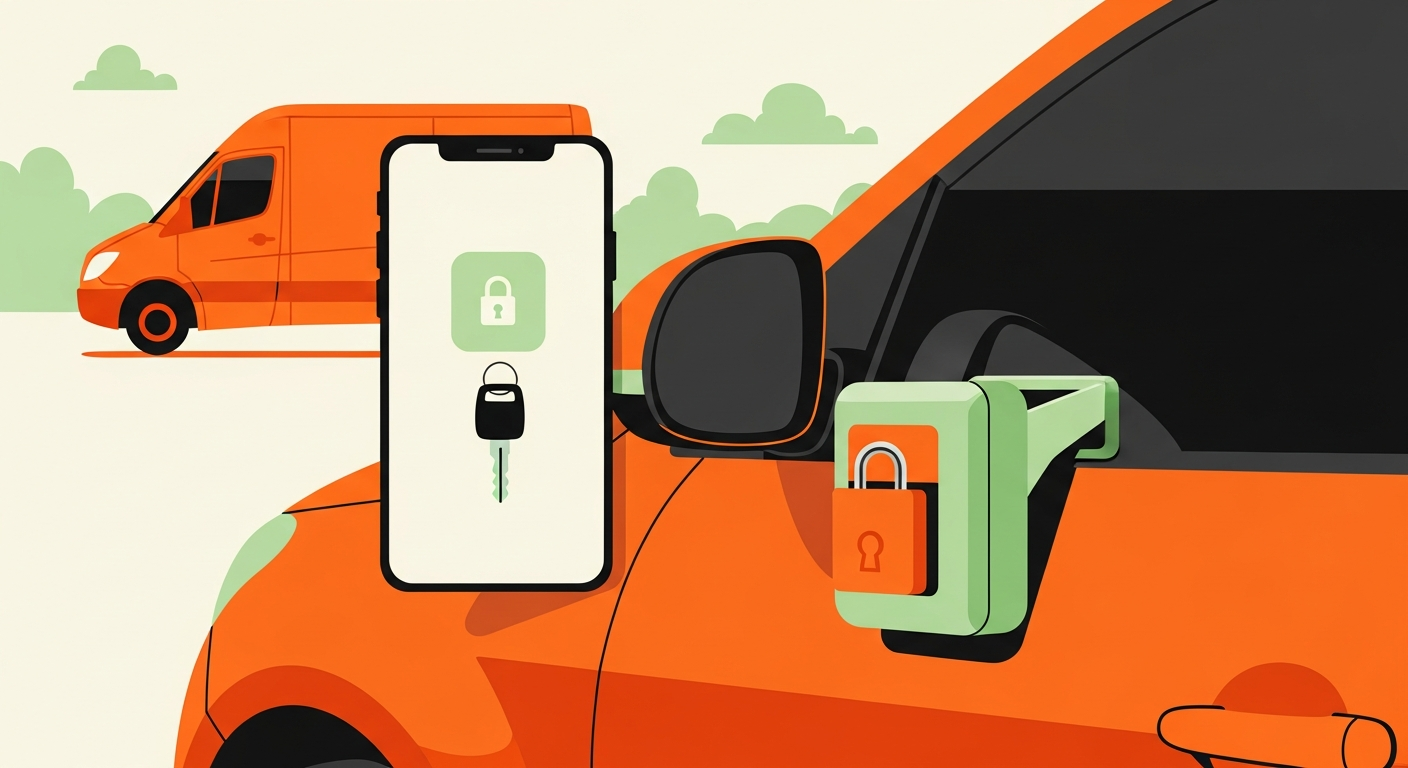
Lockboxes at the vehicle location. A lockbox is a small combination-secured container holding the physical key, mounted at or near the vehicle. The renter receives a code, retrieves the key, and drives off. Cheapest, simplest, and the most common starting point -- but the security depends entirely on code discipline.
Smart key and keyless entry systems. A keyless entry system lets the vehicle be unlocked and started without a physical key handoff, typically through an app or a code, sometimes integrated with a telematics device. Higher cost and more setup, but no physical key sits in a box waiting to be taken, and codes can be rotated per trip automatically.
Delivery-based handoff. Rather than a fixed pickup location, the vehicle is delivered to the renter -- an airport, hotel, or address -- and left with the key secured (often still via a lockbox on the vehicle). This shifts the labor from meeting to driving, which can be delegated to someone else in a way that a personal handoff can't. Turo remote delivery loop covers building this into a repeatable route, and Turo airport delivery logistics guide covers airport-specific implementation.
Security Tradeoffs
Each approach fails differently, and knowing how is what lets you design around it.
Lockbox: the code is the whole security model. The realistic failure mode isn't a broken lockbox -- it's a code shared insecurely. A renter forwards it to a friend, or a code never gets rotated between trips and a previous renter still has it. Rotate codes every single trip, without exception. This is the discipline that makes lockboxes viable and the lapse that makes them a liability.
Keyless entry: stronger, with a dependency. Per-trip credentials that expire automatically remove the code-sharing problem structurally. The tradeoff is that you've added a system that can fail -- a dead device or a connectivity issue becomes a renter who can't start the car.
Delivery: strongest control, highest labor. You know exactly where the vehicle went and when. But it costs a drive per trip, which is only a win if you can delegate it or route it efficiently.
Across all three, a GPS tracker meaningfully changes the risk calculus -- if a vehicle is taken outside the terms of a trip, you know where it is. The best GPS tracker for Turo cars breakdown covers hardware options, and pairing tracking with any remote handoff method is what most experienced fleet operators end up doing.
Method Comparison
| Method | Typical Setup Cost | Security Level | Best Fit |
|---|---|---|---|
| Lockbox | Lowest -- per-vehicle hardware only | Moderate; depends entirely on code rotation discipline | Single location, cost-sensitive, early fleets |
| Keyless entry system | Higher -- hardware plus possible subscription | Strong; per-trip credentials, no physical key exposed | Distributed fleets, higher-value vehicles |
| Delivery-based handoff | Low hardware, ongoing labor cost | Strong control; you place the vehicle | Airport-heavy demand, delegatable labor |
Verify current pricing and integration compatibility against vendor specs -- both shift, and a lockbox's real cost is trivial next to what a keyless system with a subscription runs over a year across ten cars.
Communicating Instructions Without Creating a Support Burden
Here's the trade most operators don't see coming: badly executed remote handoff replaces your handoff time with support time. A confused renter messaging you from a parking garage is not an improvement over meeting them.
What actually prevents that:
Photos, not descriptions. "The lockbox is on the driver's side mirror" is a sentence. A photo of the lockbox on the mirror is unambiguous. Send photos of the vehicle, its exact parking spot, and the lockbox location.
Location specificity beyond an address. For a distributed fleet, an address isn't enough -- which level of the garage, which numbered space, what the surroundings look like. This is where renters most often get stuck.
Sequenced instructions. Numbered steps, sent at the right time, covering exactly what to do in order. Not a paragraph.
Send them before they're needed. Instructions arriving as the renter pulls up are instructions read in a hurry.
Standardize this once and reuse it per vehicle rather than writing it fresh each trip. It belongs in your Turo host onboarding checklist as a per-vehicle asset created when the car joins the fleet.
Single Location vs. Distributed Fleet
These scale very differently, and the right method depends on which you are.
One location. Lockboxes work well. Instructions are simpler because renters come to a known place, and you can standardize signage and layout. Consistent, cheap, low-friction.
Distributed across a city. Everything gets harder. Each vehicle needs its own location instructions, "renter can't find the car" becomes the dominant support category, and keyless entry starts justifying its cost because remote credential control matters more when you can't quickly drive over. Delivery also becomes more attractive, since you're partly absorbing the distribution problem anyway.
The honest read: a distributed fleet on lockboxes alone works, but it generates support volume that eats into the time remote handoff was supposed to save.
Common Mistakes
Unclear instructions. The single biggest one. Trading handoff time for support messages is not progress. Photos and specificity fix this cheaply.
Weak lockbox security or stale codes. Not rotating codes per trip is the most common real security lapse in Turo fleet operations. Rotate every trip.
No backup plan. A renter can't find the car, the lockbox won't open, the keyless system doesn't respond -- what happens? You need an answer before it happens: a local contact, a spare access path, a phone number that gets answered. Without one, the failure becomes a cancelled trip and a bad review.
Going remote without documentation discipline. Remote handoff means you're not there to inspect the vehicle at handoff, which makes documented condition evidence more important, not less. Turo host chargeback protection covers the photo protocol that has to fill the gap your physical presence used to.
Moving the whole fleet at once. Convert one vehicle, run it for a few weeks, fix what breaks, then roll out. The failure modes are cheaper to find on one car.
FAQ
At what fleet size should I switch to remote key exchange?
Most operators find in-person handoff becomes the binding constraint around four to six vehicles, since handoff load tracks trip count rather than car count. If you're declining bookings or turning cars around slowly because you can't be there, you're already past the point.
Are lockboxes secure enough for Turo?
They can be, provided you rotate the code every single trip. The realistic failure isn't the box being defeated -- it's a code that gets shared or reused. Pairing a lockbox with a GPS tracker covers the residual risk most operators worry about.
What happens if a renter can't access the key?
That's exactly why you need a backup plan before you go remote: a local contact who can respond, a secondary access method, and a reliably answered phone. Without one, an access failure becomes a cancelled trip.
Is keyless entry worth the extra cost?
It becomes worth it as fleets distribute geographically and vehicle values rise, since per-trip credentials remove the code-sharing risk and remote control matters more when you can't quickly drive to the car. At a single location with modest vehicles, a disciplined lockbox setup is usually sufficient.
Does remote handoff hurt my reviews?
Only if it's executed poorly. Renters generally prefer remote handoff -- it's more flexible for them. Bad instructions are what generate complaints, not the absence of a person.
The Takeaway
Turo host key exchange systems remove the one constraint that genuinely caps fleet size: your physical presence at every handoff. Pick the method that fits your geography -- lockboxes with rigorously rotated codes at a single location, keyless entry for a distributed or higher-value fleet -- invest more in the instructions than the hardware, and have a backup plan for access failures before your first remote trip rather than during it.