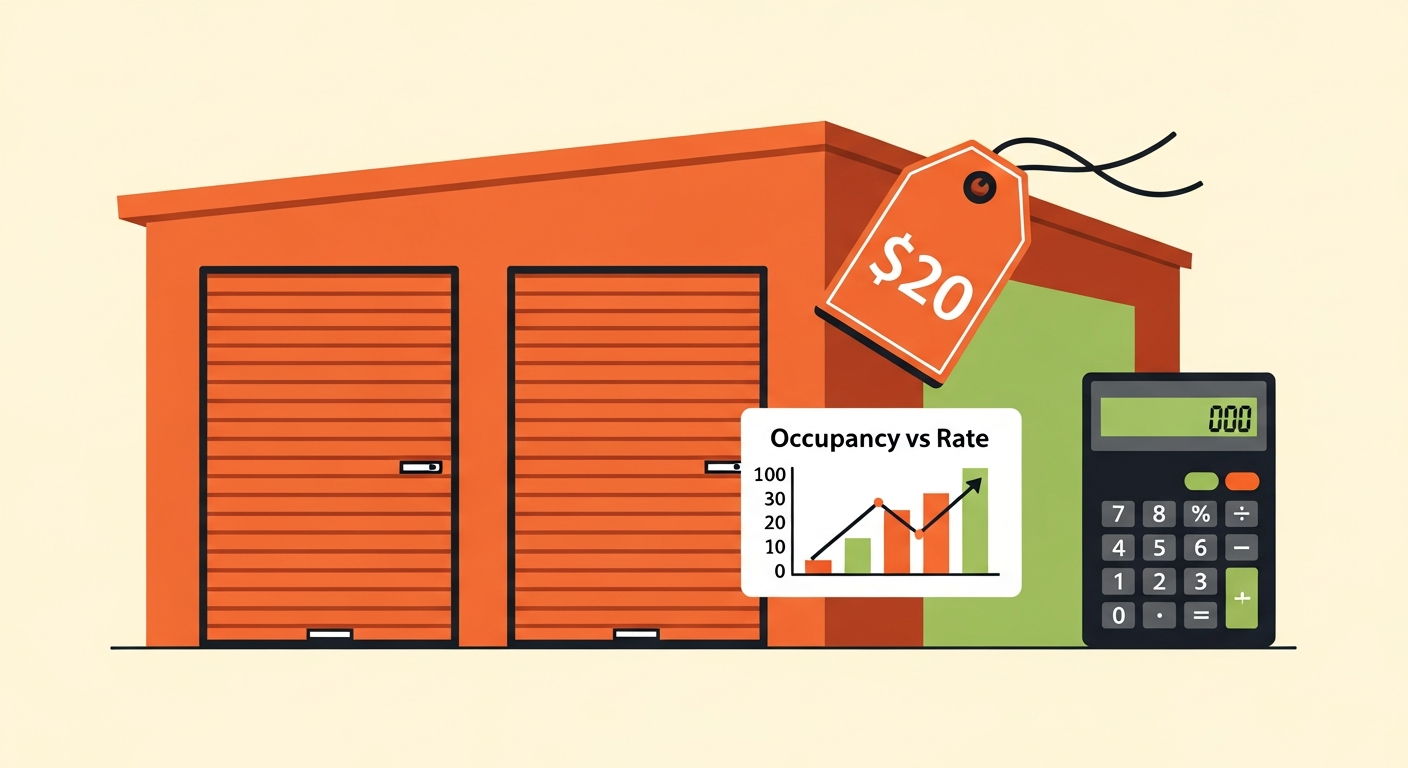
The highest price you can list isn't the highest-earning price. Once occupancy rate -- the share of time your space is actually rented rather than sitting empty -- enters the math, a moderate rate that stays filled routinely beats a premium rate that doesn't. The storage space pricing calculator is built to model exactly that tradeoff so you set a number based on expected earnings, not on the boldest listing you can find nearby.
Why Price and Occupancy Have to Be Modeled Together
Price and occupancy move in opposite directions -- push the rate up and fewer renters bite. That's price elasticity in plain terms: how much demand falls as your price rises. Model either one alone and you get the wrong answer.
This is where hosts most often go wrong. They find a single high comparable listing -- a similar space nearby -- price to match it, and then sit empty for weeks. What they missed is that the comparable might be in a better location, might have features theirs doesn't, or might itself be sitting vacant. One listing is not a market. A price that looks defensible against a cherry-picked comp still earns nothing if nobody books it.
The other half of the lesson: getting the price perfect on day one matters less than revisiting it after the first few weeks. Real booking behavior tells you more than any estimate. If the space fills within days, you priced under the market. If it sits, the price needs to come down. That feedback loop is the actual pricing method -- the calculator just gets you to a defensible starting point fast.
What the Calculator Needs From You
- Space type and size. Garage bay, driveway, RV pad, climate-controlled room -- each behaves differently.
- Location tier. Dense urban, suburban, or lower-demand area, since location drives occupancy at least as much as it drives achievable rate.
- Comparable local listings, if you know them. Several, not one. A range beats a single data point.
- Desired occupancy target. What you're actually optimizing for -- consistently filled, or premium rate with accepted vacancy.
Using the Output
The calculator returns estimated monthly income across price points at your expected occupancy, so you can see which rate actually earns most rather than which rate looks highest.
Setting an initial price: pick the rate where estimated monthly income peaks, not the highest rate the model will accept. These are rarely the same number.
Repricing an underperforming listing: if your space has been sitting empty, run your current rate through the model and compare it against lower price points. Vacancy is expensive in a way a slightly lower rate isn't -- an empty month earns zero regardless of how good the listed price looks.
A Worked Example
The same space, two pricing strategies, illustrative only:
| Scenario | Listed Rate | Assumed Occupancy | Estimated Monthly Income |
|---|---|---|---|
| Premium pricing | Higher rate | Lower -- space sits vacant part of the year | Lower overall, despite the better headline rate |
| Market pricing | Moderate rate | Higher -- fills consistently | Higher overall, despite the lower headline rate |
Twelve months at strong occupancy at a moderate rate routinely beats twelve months at partial occupancy at a premium rate. That inversion is the whole reason to model the two together rather than chasing the highest number you can justify. Sustained occupancy is where annual income actually comes from -- Neighbor host occupancy rate optimization covers keeping it there once you've priced right.
FAQ
How does it account for local market differences?
Through your location tier and any comparable listings you enter. Occupancy estimates are based on your inputs and general patterns, not a live read of your neighborhood's demand -- so actual results depend on local conditions the tool can't fully predict. The better your comps, the better the estimate.
Is it useful for repricing an existing listing, or only new ones?
Both, and repricing is where it's often most valuable. If a listing has been sitting empty, you have real evidence your price is above what your market supports. Model lower price points against the vacancy you're already experiencing and the math usually makes the decision obvious.
How often should I revisit my price?
Quarterly is a reasonable default, plus any time occupancy shifts noticeably. Local supply changes as other hosts list or delist, and demand moves seasonally -- especially for vehicle and RV storage. Price set once and left static drifts out of line with the market.
Run Your Numbers
Set your rate with the storage space pricing calculator rather than guessing off a single neighbor's listing, then revisit it after a few weeks of real booking data. If you're pricing a garage specifically, the garage storage rental income calculator models that space type in more detail. For the setup itself, see how to list storage space on Neighbor, and for the economics behind the numbers, the Neighbor.com host earnings guide shows what actually drives income in this market.