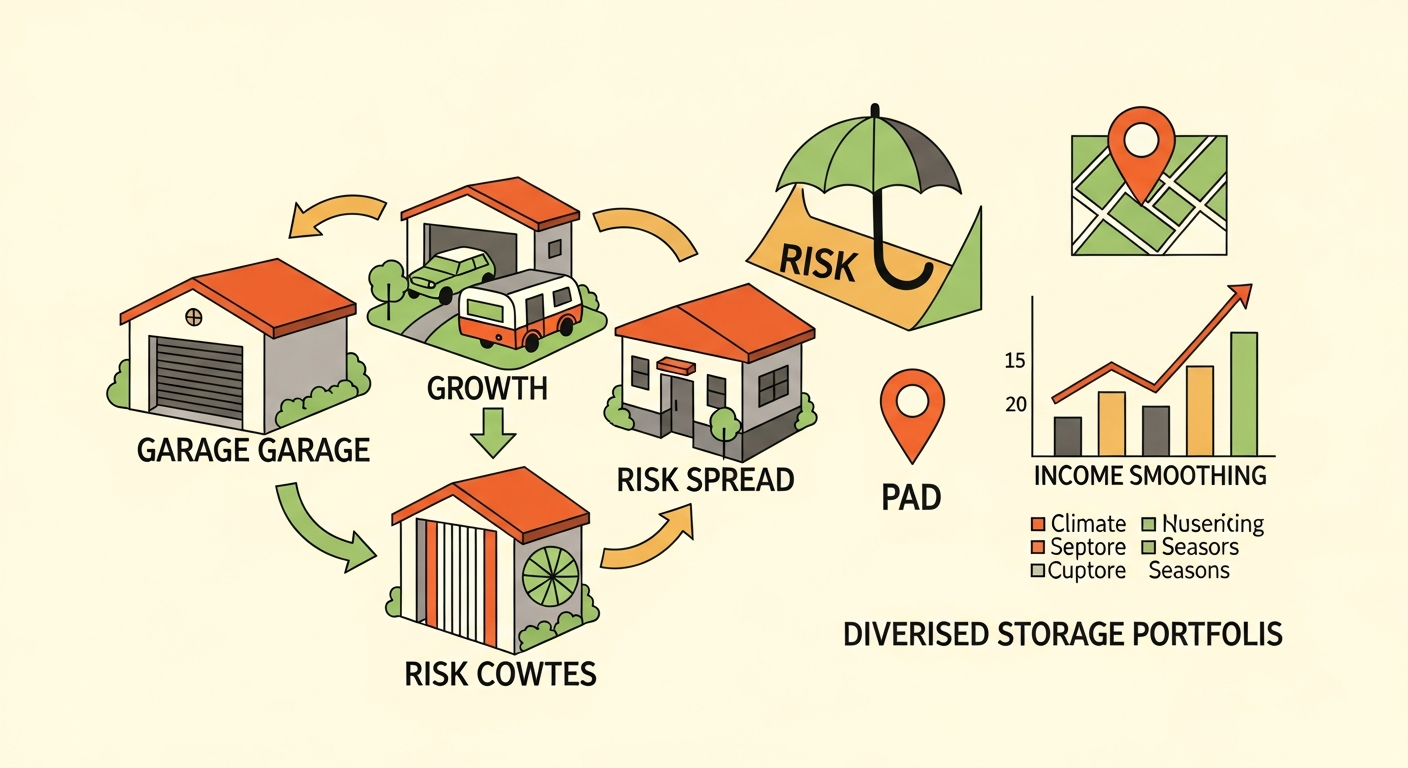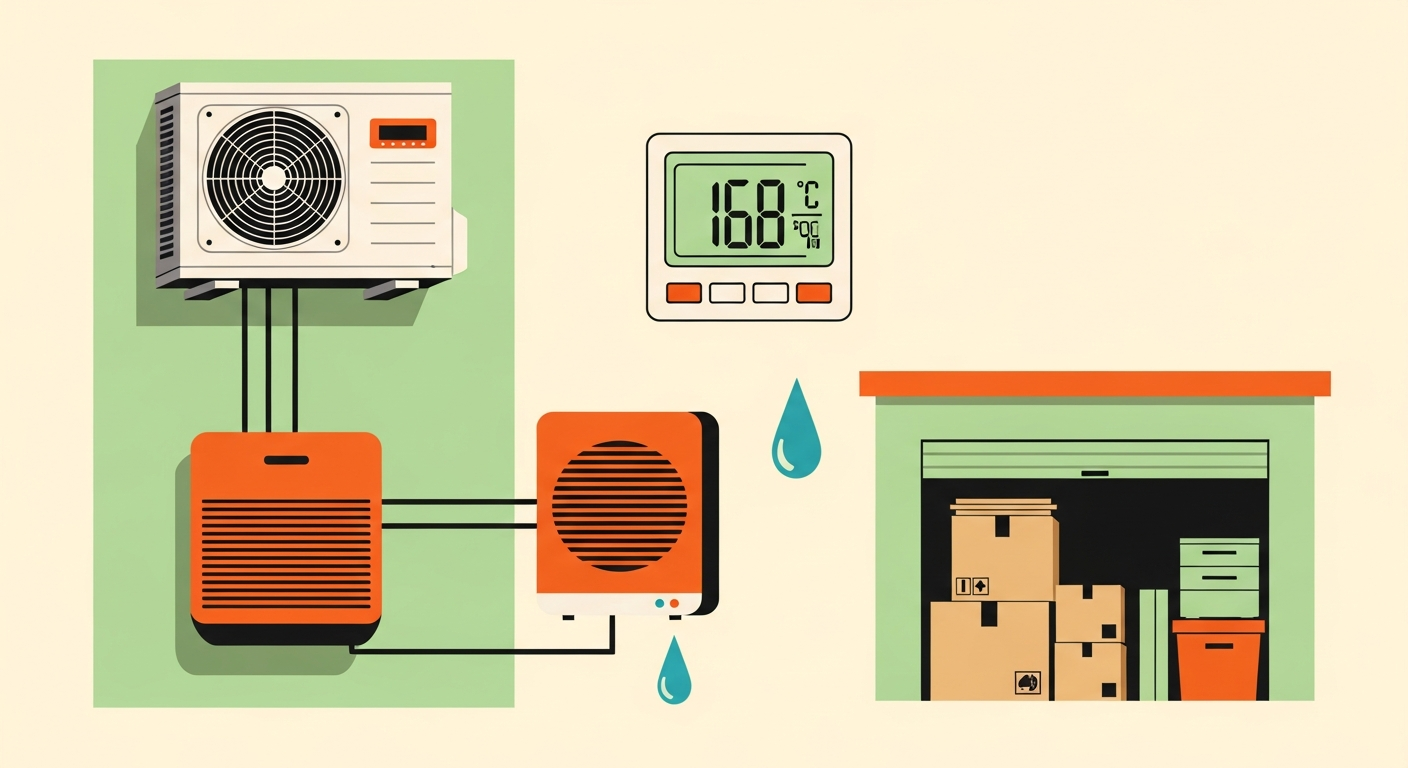
Whether climate control pays for itself on a Neighbor listing depends on three things: how severe your local climate actually is, what renters in your area are searching to store, and whether you're building it in or retrofitting it later. A blanket "yes, it adds value" is misleading -- in a mild market with no demand for it, climate control is a cost with no return. This article gives you the real cost breakdown, the payback logic, and the demand-validation step most guides skip, so you can run your own numbers rather than guess.
This assumes you understand basic Neighbor economics from the Neighbor.com host earnings guide and want to work through this one investment decision. Every cost and premium figure here is a general pattern -- equipment, utilities, and achievable pricing vary significantly by region and must be validated locally.
What Drives Demand for Climate-Controlled Storage
Climate control -- maintaining a stable temperature and humidity range rather than letting the space track outdoor conditions -- only commands a premium when renters have something that needs it. So the first question isn't "should I add it," it's "does anyone here need it."
The items that actually drive climate-controlled demand:
Electronics. Sensitive to heat and humidity extremes. Renters storing equipment, servers, or media often specifically seek climate control.
Documents and photographs. Paper degrades in humidity. Business records, archives, and personal collections are common drivers.
Wine. Needs both stable temperature and humidity, and wine storage renters pay a real premium where that demand exists.
Furniture, especially wood and upholstery. Wood warps and cracks with humidity swings; upholstery grows mildew. Higher-value furniture is a frequent driver.
Certain vehicles and specialty items. Collector vehicles, musical instruments, art -- lower-frequency but high-value when present.
The pattern: climate-controlled demand tracks what people in your area own and need to store, which correlates with local affluence, housing type, and industry. A market storing mostly seasonal gear and boxes has thin climate demand; one storing electronics, documents, and quality furniture has real demand. Validate which yours is before spending -- the how is below.
How Climate Control Affects Pricing and Occupancy
Where demand exists, climate control affects both levers of income.
Pricing. Climate-controlled space commands a premium over comparable non-controlled space in the same market -- often a substantial one where demand is genuine. That premium is the entire return you're buying.
Occupancy. Less obvious and often more valuable: climate-controlled space can also occupy more consistently, because the renters who need it tend to store longer-term (archives, collections, furniture in a long transition) and are less price-sensitive once they've found suitable space. Longer average tenancy plus lower churn is a real, underappreciated part of the return.
But both depend entirely on demand. In a market with no climate demand, you get neither -- no premium and no occupancy benefit, just a higher cost base. This is why demand validation is the whole game, not equipment selection.
The Real Cost Breakdown
Three cost buckets, and hosts routinely forget the third.
Equipment. For a modest space, a dehumidifier plus a heating/cooling unit (often a mini-split -- a compact, efficient system that heats and cools without ductwork) is the common setup. Larger or more demanding spaces cost more.
Installation. A plug-in dehumidifier installs itself. A mini-split usually needs professional installation, which can rival or exceed the equipment cost. Insulation work, if the space isn't already sealed, adds meaningfully.
Ongoing utility cost. The one hosts underestimate. Climate control runs continuously, and the electricity is a permanent monthly cost against your premium, not a one-time expense. In a climate with real extremes, this can be substantial -- exactly the climates where the premium is highest, which partly offsets it.
| Factor | Non-Climate-Controlled | Climate-Controlled |
|---|---|---|
| Upfront equipment | Minimal | Moderate to high (dehumidifier + mini-split, possible insulation) |
| Installation | None to minimal | Low (plug-in) to significant (mini-split + insulation) |
| Ongoing utility | Negligible | Real monthly cost, scales with climate severity |
| Achievable price | Base market rate | Premium where demand exists; base rate where it doesn't |
| Occupancy pattern | Standard churn | Potentially longer tenancy, lower churn (demand-dependent) |
Run your own numbers through the storage space pricing calculator with and without the premium, and net the ongoing utility cost against the premium -- the gross premium always flatters the decision until you subtract the running cost.
How Local Climate Severity Changes the Math
This is the single biggest swing factor, and it cuts both ways.
Mild climate. Where outdoor conditions rarely threaten stored items, the value proposition is weak -- renters don't need protection from conditions that barely occur. Premium is low, demand is thin, and your ongoing utility cost is also low (you're rarely running the system hard), but low cost against near-zero premium still nets out poorly.
Severe climate. Extreme summer heat, hard winter cold, or high humidity create genuine need. Items are genuinely at risk in an uncontrolled space, so renters actively seek and pay for climate control. Premium is high and demand is real -- but ongoing utility cost is also high, since you're running the system hard exactly when it matters. The premium generally outweighs the cost where demand is strong, but you must model both, not just the premium.
The counterintuitive part: severe climates have both the highest premium and the highest running cost. The decision isn't "severe climate = worth it." It's whether the premium net of the elevated running cost clears your equipment payback in a reasonable window.
Worked Example One: Mild Climate, Modest Demand
A garage bay in a temperate coastal market. Mild year-round, few extremes.
Demand check: comparable listings show little climate-controlled inventory, and what exists isn't priced much above standard space. That's your answer forming already -- thin demand.

The math: modest upfront equipment cost, low ongoing utility (rarely running hard), but the achievable premium is small because renters here don't value protection from conditions that don't occur. A small premium against real (if modest) upfront cost means a long payback period -- the time for the added income to recover the added cost.
The read: hard to justify. With a small premium and a payback period stretching out, your capital is better spent elsewhere -- improving photos, adding security, or another space entirely as part of a self storage host diversification strategy. Climate control here solves a problem the market doesn't have.
Worked Example Two: Severe Climate, Strong Demand
The same garage bay in a market with brutal summer heat and humidity.
Demand check: comparable climate-controlled listings are priced well above standard space and show strong occupancy -- often booked. That's validated demand, not assumed.
The math: higher upfront cost (you need real cooling and dehumidification, possibly insulation) and meaningfully higher ongoing utility (the system runs hard through the season). But the premium is substantial and the occupancy is stickier -- renters storing heat-sensitive items here can't use uncontrolled space at all. Even netting the elevated utility cost against the premium, the payback period is far shorter than the mild-climate case.
The read: likely worth it, provided the demand check confirmed the premium is real and not just aspirational. In this market, uncontrolled space may even be at a disadvantage for certain renters, making climate control closer to table stakes than a luxury.
The contrast is the whole point: same physical upgrade, same square footage, completely different payback because climate severity and demand differ. Never port an ROI conclusion from one market to another.
Retrofit vs. Built-In: Why Timing Matters
If you're deciding at all, decide early, because retrofitting is meaningfully more expensive than building climate control in from the start.
A space designed for climate control from the outset gets its insulation, sealing, and electrical capacity handled during initial setup, when access is easy and the work is incremental. Retrofitting means adding insulation to a finished space, running electrical to a space that wasn't wired for the load, and working around an existing setup -- each of which costs more done later than done first.
The practical implication: if there's any real chance you'll want climate control, and your demand check suggests the market supports it, building it in during initial setup is usually cheaper than adding it after the listing is live. If you're reading this before your first setup, that's the cheapest moment you'll ever have to make this call -- worth factoring in before you finalize, which how to list storage space on Neighbor walks through.
Common Mistakes
Adding climate control without validating local demand first. The costliest error. Installing based on the assumption demand exists, when the local market doesn't actually search for or pay a premium for it. Validate before you spend.
Underestimating ongoing utility cost. Hosts calculate ROI on the premium against equipment cost alone and forget the permanent monthly running cost. In a severe climate especially, that running cost materially lengthens the real payback. Net it in.
Assuming your premium will match top comparables. Established climate-controlled listings command their premium partly on reputation and review history -- a track record you don't have yet. A brand-new climate-controlled listing won't immediately achieve a veteran listing's rate, so model a conservative premium initially and let it climb with your reviews, as covered in Neighbor host occupancy rate optimization.
Over-building for the demand. Full temperature-and-humidity control where the market only needs humidity managed is wasted capital and running cost. Match the solution to the actual need -- see the partial-control question below.
Validating Demand Before You Invest
The step most guides skip entirely, and the one that de-risks the whole decision:
Check comparable listings for climate-controlled inventory. Search your area. Is there any? None at all can mean either no demand or an unmet opportunity -- ambiguous, so dig further.
Check their pricing. Are climate-controlled comparables priced meaningfully above standard space? A real premium is evidence of real demand. A thin premium means the market doesn't value it much.
Check their occupancy. Priced high and consistently booked is the strongest possible signal -- validated, paid demand. Priced high and sitting empty means the premium is aspirational, not achieved.
Consider what your area stores. Local housing type, affluence, and industry hint at whether heat- and humidity-sensitive items are common.
This costs you an afternoon and prevents the single most expensive mistake in this decision. Do it before spending a dollar on equipment.
When Climate Control Is Clearly Not Worth It
Be honest about the clear no: a mild year-round climate with no evidence of renters searching for or paying a premium for climate control. If comparables are scarce, unpriced-above-standard, or sitting empty at a premium, the market is telling you plainly. Adding climate control here is spending real money -- upfront and ongoing -- to solve a problem your renters don't have. Your capital returns more elsewhere, whether in another space, better security, or a different asset entirely, perhaps even tool and equipment rental income as an adjacent line. Don't build for a demand that isn't there.
Frequently Asked Questions
How much of a premium does climate control actually add?
It varies widely by market and demand -- substantial where genuine demand exists, negligible where it doesn't. The only reliable way to know yours is checking what climate-controlled comparables in your specific area charge and whether they're actually booked at that rate. Don't assume a national average applies.
Does partial climate control (dehumidification only) offer a different ROI?
Often a better one, in the right market. Where the real threat is humidity rather than temperature -- common in humid but not temperature-extreme regions -- a dehumidifier alone costs far less to buy and run than full temperature control, while capturing much of the premium. Matching partial control to a humidity-driven need frequently beats full control's ROI. Diagnose what your climate actually threatens before over-building.
How do I validate demand before investing?
Check comparable climate-controlled listings in your area for three things: whether they exist, whether they're priced above standard space, and whether they're actually occupied at that price. Priced-high-and-booked is validated demand; priced-high-and-empty is aspiration. This afternoon of research prevents the most expensive mistake in this decision.
What's the typical payback period?
Entirely dependent on the premium net of running cost against your upfront spend -- short in a severe climate with strong validated demand, very long (or never) in a mild market with thin demand. Run your specific numbers through the garage storage rental income calculator rather than relying on a general figure.
Should I retrofit an existing space or only build it into new ones?
Building in during initial setup is meaningfully cheaper than retrofitting, since insulation, sealing, and electrical are easier before a space is finished. If demand is validated and you're still in setup, build it in. Retrofitting a live listing can still pay off in a strong-demand market, but the bar is higher because the cost is higher.
Will climate control help occupancy even if I don't raise the price much?
It can, because climate-control renters often store longer-term and churn less. In some cases the stickier, longer tenancy is worth more than a headline premium, especially if it reduces vacancy gaps. Factor tenancy length and churn into the calculation, not just the nightly premium.
Is it worth it just to future-proof, even without current demand?
Rarely, if you're paying ongoing running costs for demand that isn't there. Building the capability in cheaply during setup (insulation, wiring) to enable it later is defensible; running full climate control speculatively is not. Enable cheaply, activate when demand is proven.
The Takeaway
Neighbor host climate control ROI comes down to local climate severity and validated demand, not a universal rule -- in a severe climate where comparable listings prove renters pay a premium and stay booked, the payback is often short; in a mild market with thin demand, it's money spent solving a problem your renters don't have. Validate demand by checking comparables' pricing and occupancy before spending a dollar, net the ongoing utility cost against the premium rather than just the equipment cost, and build it in early if you're going to do it at all.