[B1] Neighbor's host protection covers specific damage and theft scenarios, but it has real limits that hosts routinely assume don't exist until a claim tests them. Understanding exactly what platform-level coverage does and doesn't include — and where your own homeowner's policy may leave a gap — is what separates a host who recovers after an incident from one who eats the loss. This article breaks down what Neighbor host insurance coverage actually protects, the common exclusions, and when you need coverage of your own.
[B2] This assumes you already have a listing live or are about to, and focuses specifically on the insurance and liability layer rather than listing setup. One caveat repeated throughout because it genuinely matters: specific coverage terms, limits, and exclusions change and vary, so verify against Neighbor's current host terms and confirm with a licensed insurance professional — treat nothing here as fixed or universal.
[B3] ## What Neighbor's Host Protection Typically Covers
[B4] Neighbor offers a host guarantee — a platform-level protection program covering certain damage and loss scenarios affecting the host, subject to specific terms, conditions, and limits. Broadly, this type of protection tends to focus on damage to the host's property (the space itself) and certain theft or loss scenarios, up to a coverage limit.
[B5] The important word is "certain." Platform protection is defined by its terms — what qualifies, what's excluded, what documentation a successful claim requires, and what the coverage cap is. It is not open-ended coverage for anything that could go wrong involving your space or a renter's items.
[B6] To file a successful claim, this kind of program typically requires documentation: evidence of the space's condition, proof of the incident, and adherence to a reporting timeline. This is exactly why condition documentation before a renter's items go in matters so much — covered below, since it's the difference between a payable claim and a denied one.
[B7] Confirm the current coverage scope, limit, and claim requirements against Neighbor's host terms directly rather than assuming, since these are precisely the details that change over time.
[B8] ## Common Exclusions and Edge Cases Hosts Don't Expect
[B9] This is where hosts most often discover a gap, usually at the worst moment.
[B10] Damage from prohibited stored items. If a renter stores something against the platform's or your listing's rules — a prohibited hazardous item, for example — and it causes damage, coverage can be complicated or excluded. Enforcing what's stored is partly your responsibility, and a violation can undermine a claim.
[B11] Disputes over item value. When the loss involves a renter's belongings, disagreements over what those items were actually worth are common. Establishing value after the fact is genuinely difficult, and this ambiguity is a frequent source of contested claims.
[B12] Gaps for high-value renter belongings. A renter storing high-value goods may assume a level of coverage that platform protection — designed around specific scenarios and limits — doesn't actually provide for their items. The mismatch between what a renter expects and what's covered can become the host's headache.
[B13] Documentation shortfalls. A claim without adequate evidence of prior condition or the incident itself may be denied regardless of merit. The gap here isn't in the coverage terms but in what the host failed to capture.
[B14] For the liability side specifically — harm or loss beyond damage to the space itself — Neighbor host liability protection is distinct from the property-damage-focused host guarantee.
[B15] ## How Homeowner's or Renter's Insurance Interacts With Hosting
[B16] Here's a gap that catches storage hosts off guard: your existing homeowner's or renter's policy may not extend to storage hosting, because many such policies carry a business-use exclusion — a clause excluding coverage for losses arising from business or commercial activity on the property.
[B17] Renting out storage space is a commercial activity. That means a loss connected to your hosting could fall into the business-use exclusion on a personal policy, leaving you uncovered by the very policy you assumed had your back. Whether it does depends on your specific policy language and jurisdiction, which is exactly why you should check your actual policy rather than assume.
[B18] The practical step: read your homeowner's or renter's policy for a business-use exclusion, and ask your insurer directly whether storage hosting is covered, partially covered, or excluded. Don't infer it — get the answer specific to your policy. This single check prevents one of the most common and costly coverage surprises in storage hosting.
[B19] ## Incident Scenarios and Where Gaps Appear
[B20] The table below shows general patterns only — confirm each against Neighbor's current terms and a licensed insurance professional, since actual outcomes depend on specific policy and platform language.
[B21] | Incident Scenario | What Protection Typically Applies | Where Gaps Commonly Appear | |---|---|---| | Damage to your space (structure) | Host guarantee may cover, within limits | Documentation shortfalls; exceeding coverage cap | | Theft affecting the space | May be covered under specific conditions | Proof requirements; scenario not matching covered terms | | Dispute over a renter's stored item value | Limited; renter items may not be host's coverage | Value disputes; renter assumed more coverage than exists | | Damage caused by prohibited stored items | Often complicated or excluded | Rule violation undermining the claim | | Business-related loss under personal policy | May be excluded entirely | Business-use exclusion on homeowner's/renter's policy |
[B22] The recurring theme: the gaps cluster around documentation, coverage limits, renter-item value, and the personal-vs-business insurance line — not around the core "damage to my space" scenario most hosts picture.
[B23] ## When a Multi-Space Host Should Consider a Dedicated Policy
[B24] The more spaces you run, the more your aggregate exposure grows, and at some point platform protection plus a personal policy stops being enough.
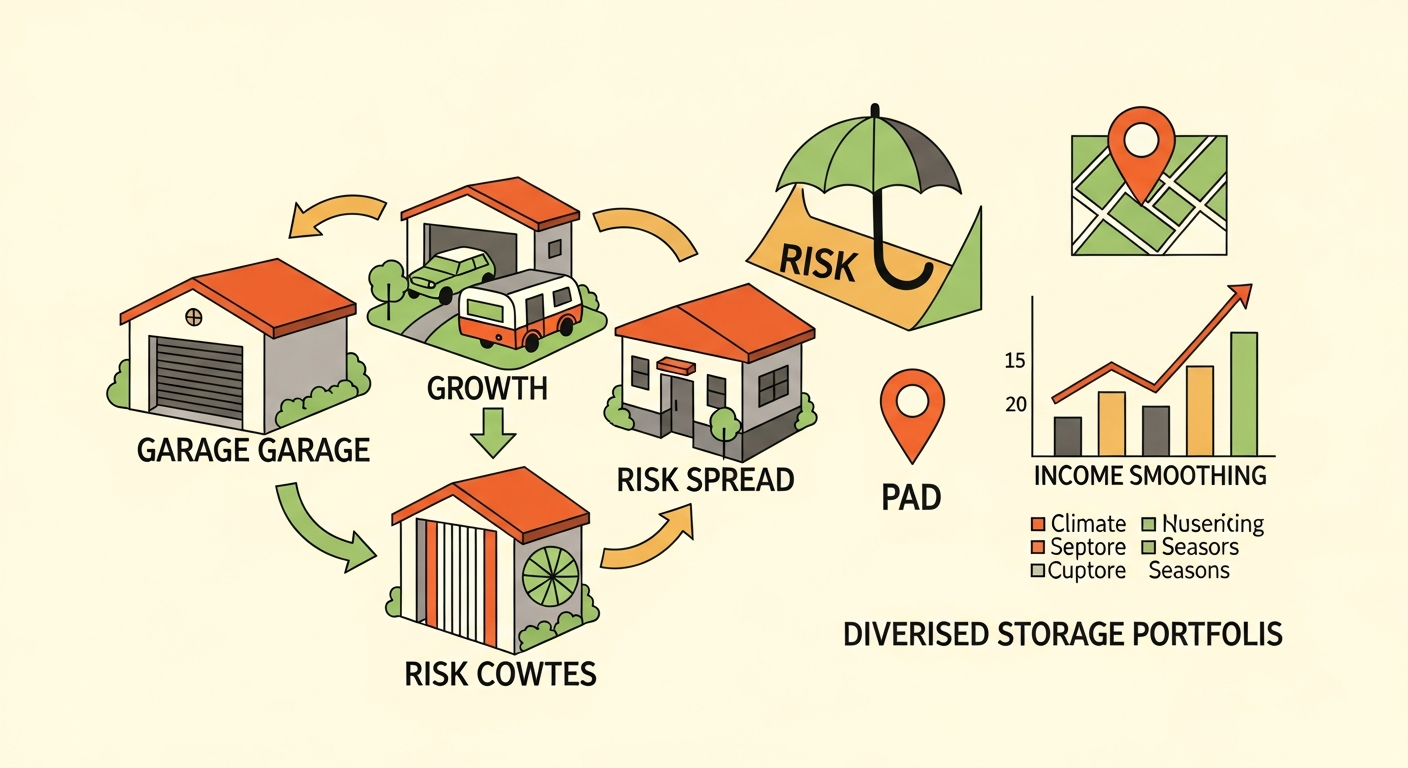
[B25] A host operating several storage spaces as a genuine business — especially across multiple properties, or as part of a broader self storage host diversification strategy — should consider a dedicated business or liability policy. At that scale you're running a commercial operation, and the business-use exclusion on personal policies becomes a live problem rather than a theoretical one. A dedicated policy built for the business closes gaps that platform protection and a personal policy leave open.
[B26] This matters more as the value and volume of what you're hosting rises. A host storing multiple RVs (where RV storage hosting income comes with higher-value assets on-site) or running climate-controlled units carries different exposure than someone renting out a single driveway, and coverage should reflect that. A sharing economy insurance broker who understands peer-to-peer storage specifically is worth consulting here, since the interaction between platform protection, personal policy exclusions, and dedicated coverage is genuinely complex and varies by jurisdiction.
[B27] ## Common Mistakes Hosts Make Around Insurance
[B28] Assuming full coverage regardless of circumstances. The biggest one. Hosts often treat platform protection as blanket coverage, then discover the terms, limits, and exclusions only when filing. Read the actual terms before you need them.
[B29] Not documenting the space's condition before items are stored. Without a documented before-state, proving damage occurred during a rental is hard, and claims get denied on evidence grounds. Photograph the space's condition before each rental, timestamped.
[B30] Not checking for a business-use exclusion. As covered above, assuming a homeowner's policy extends to hosting without checking the exclusion is a common and expensive oversight.
[B31] Overlooking prohibited-item enforcement. Not enforcing what renters store isn't just a rule issue — it can directly undermine a claim if a prohibited item causes damage.
[B32] Not revisiting coverage as the operation grows. Coverage that fit one space rarely fits five. Scaling without revisiting insurance leaves growing exposure uncovered.
[B33] Good documentation habits — condition photos before each rental, clear records, and visible deterrence like a Neighbor host security camera setup — reduce both the frequency of incidents and the difficulty of a claim when one happens. If you're still setting up and this is your first space, how to list storage space on Neighbor covers the setup side, and the Neighbor.com host earnings guide covers the income expectations so you can weigh coverage costs against revenue.
[B34] ## Frequently Asked Questions
[B35] Does Neighbor's host protection cover everything that could go wrong? No. It covers certain damage and theft scenarios subject to specific terms, limits, and documentation requirements. It's not blanket coverage, and it doesn't necessarily cover a renter's high-value items, damage from prohibited items, or losses your personal policy excludes. Verify the current terms directly.
[B36] Will my homeowner's insurance cover storage hosting? Maybe not. Many personal policies carry a business-use exclusion that can exclude commercial activity like storage hosting. Check your specific policy language and ask your insurer directly whether hosting is covered rather than assuming it is.
[B37] What documentation do I need for a Neighbor insurance claim? Typically evidence of the space's condition before the rental, proof of the incident, and adherence to a reporting timeline. Timestamped condition photos before each rental are the single most valuable habit, since claims are frequently denied on insufficient evidence.
[B38] When should I get a dedicated business insurance policy for storage hosting? As you scale to multiple spaces or higher-value storage, and especially once you're operating as a genuine business across properties. That's when the business-use exclusion on personal policies becomes a real gap and a dedicated policy earns its cost. Consult a broker who understands peer-to-peer storage.
[B39] Who's responsible if a renter's stored items are damaged or stolen? It depends on the circumstances, the platform's terms, and whether the renter carried their own coverage. Platform protection is often oriented around the host and the space rather than fully insuring a renter's belongings, so renters storing valuables may need their own insurance. Confirm how this splits under current terms.
[B40] ## The Takeaway
[B41] Neighbor host insurance coverage protects specific scenarios well but leaves real gaps around coverage limits, renter-item value, prohibited items, and the business-use exclusion lurking in many personal policies. Read the actual platform terms, check your homeowner's policy for a business-use exclusion, document each space's condition before every rental, and step up to a dedicated business policy as you scale — verifying every specific with Neighbor's current terms and a licensed insurance professional rather than assuming you're covered.