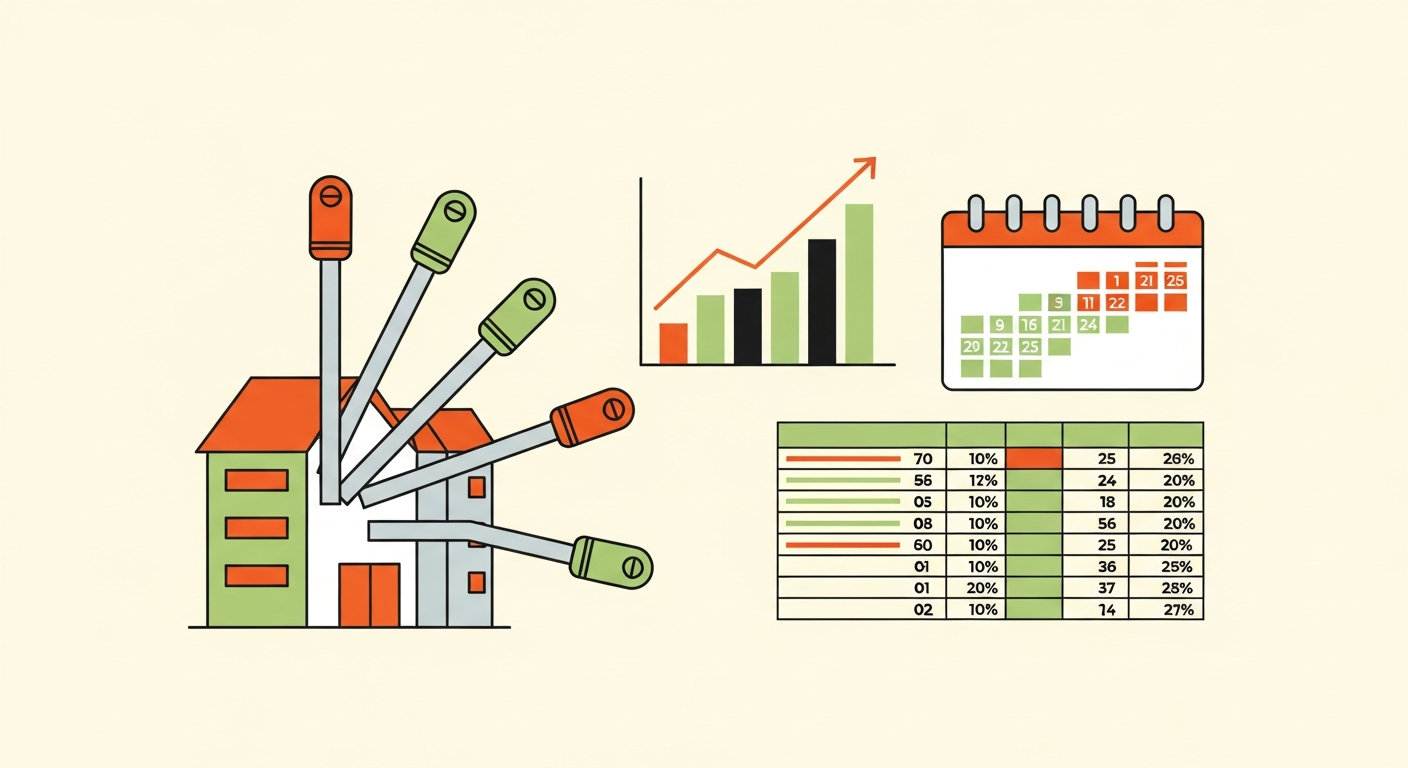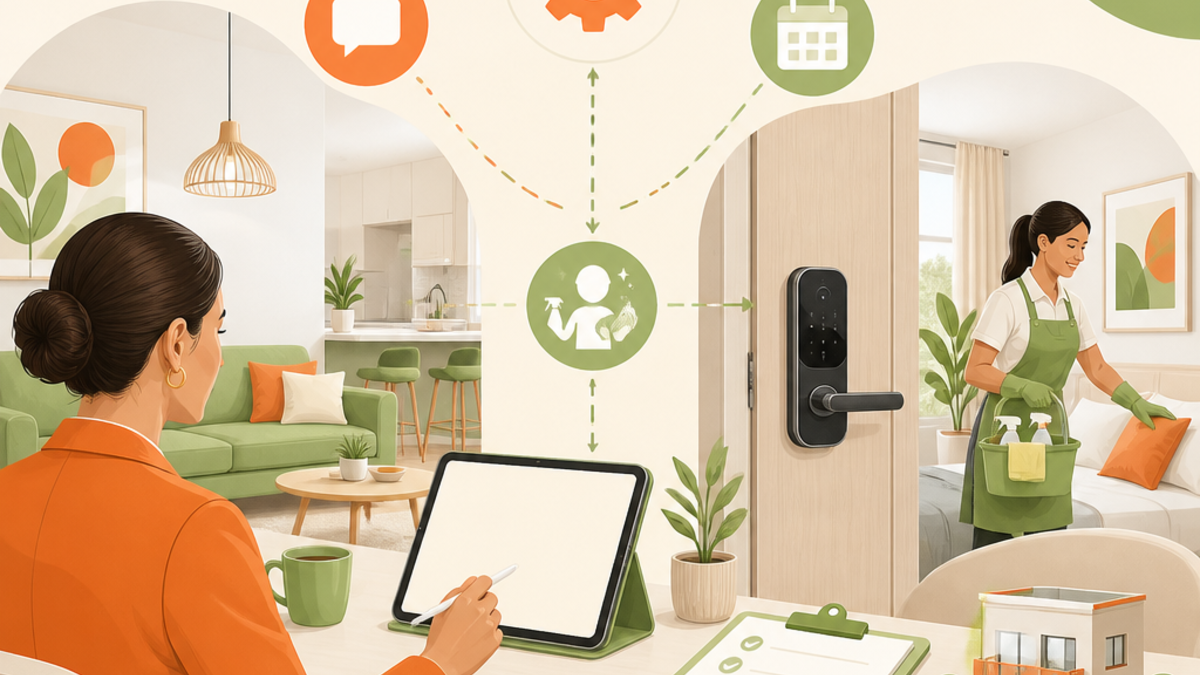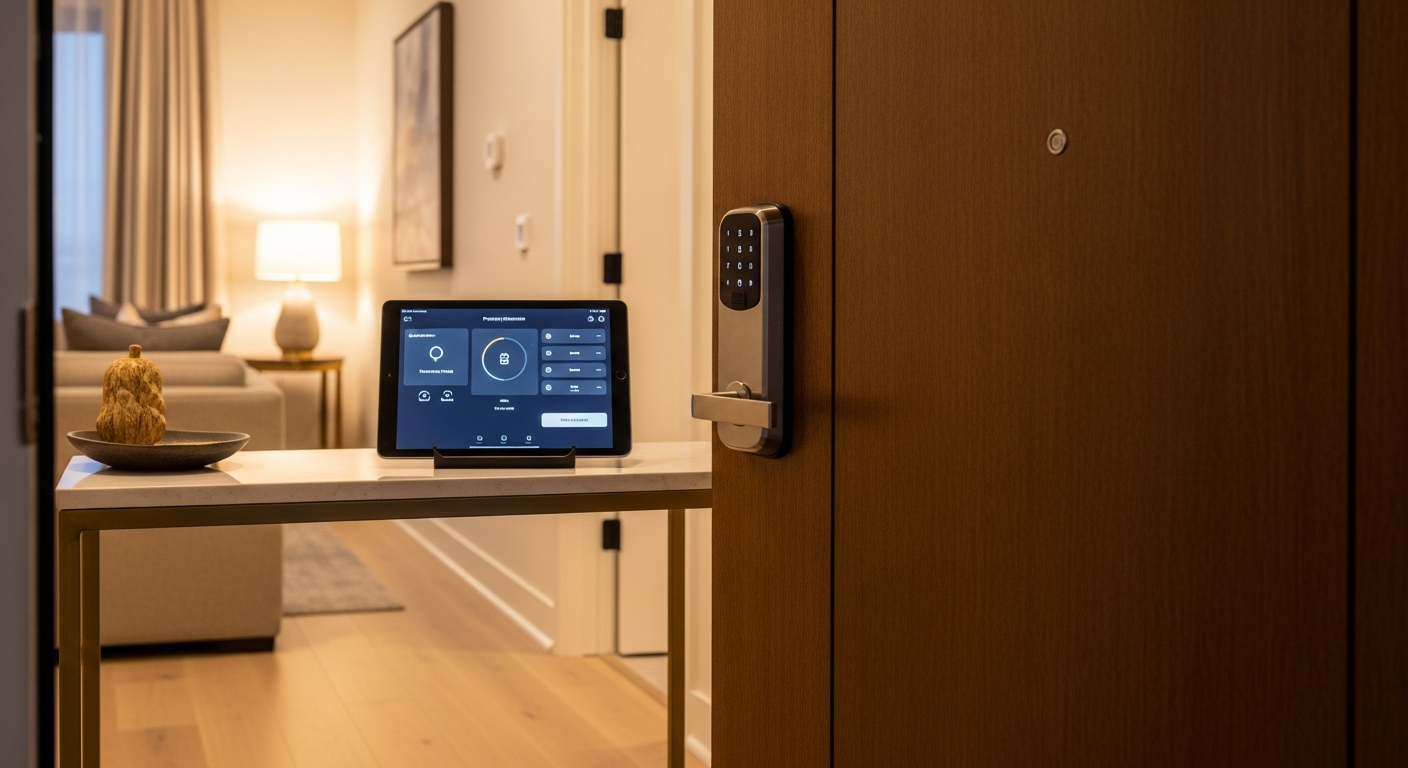
If you're still handling guest messaging, check-in, and turnover by hand, the question isn't whether to automate but what to automate first. The principle that should drive every decision: automate the highest-frequency, lowest-judgment tasks first, and keep a human in the loop wherever guest experience depends on nuance. This post lays out that sequence for building an Airbnb host automation stack, in priority order, with honest notes on where full automation actually backfires.
This assumes you already list on Airbnb and know the basic operational flow. It's about where automation genuinely pays off versus where it creates risk — not a neutral menu of every tool on the market.
Start With Self-Check-In and Smart Locks
For almost every host, self-check-in is the highest-ROI first automation. Self-check-in means guests access the property without you being physically present, typically via a smart lock — a keyless lock you can control and issue codes for remotely.
Why it's first: check-in is high-frequency (every single booking), time-sensitive (guests arrive on their own schedule, often when you're busy or asleep), and low-judgment (letting a verified guest in doesn't require nuanced decision-making). Automating it removes the single most disruptive recurring demand on a host's time — being on-call for arrivals.
Smart lock integration — connecting the lock to your booking system so codes generate and expire automatically per reservation — is the piece that makes this truly hands-off rather than just remote. Without integration, you're still manually creating codes; with it, the whole cycle runs itself.
A few operational notes: unique per-guest codes that auto-expire at checkout are more secure than a shared code, battery life and a manual-key backup matter more than hosts expect, and lock choice should be verified against your door type and your other systems for compatibility before buying. The Airbnb smart lock comparison covers device tradeoffs, and Airbnb self-check-in system setup walks the full installation process.
Automate Guest Messaging, But Keep a Human Layer
Guest messaging is the next highest-frequency task, and automation here saves real time — but this is exactly where fully hands-off automation creates guest-experience risk.
Automate the predictable, templated messages: booking confirmation, check-in instructions, mid-stay check-in, checkout reminder, review request. These are repetitive, timing-based, and identical across most guests, so scheduled automated messages handle them well and guests rarely notice they're automated.
Where a human layer stays essential: a nuanced guest complaint, an unusual request, or any message where the emotional read matters. A fully automated system responding to "the heating isn't working and we're freezing" with a scheduled "hope you're enjoying your stay!" is the kind of failure that produces a bad review no pricing tool can offset. The fix isn't avoiding messaging automation — it's routing anything outside the templated flow to a human review point rather than letting an automated reply go out unmonitored.
The practical setup: automate the scheduled sequence, but monitor an inbox for anything off-script. As you scale, Airbnb guest screening automation can also help filter inquiries at the front end, but even there, edge cases deserve a human look before a decline goes out.
Turnover and Cleaning Coordination (After You Have a Reliable Team)
Turnover automation coordinates cleaner scheduling, turnaround windows, and task confirmation between bookings. It's genuinely valuable — but it has a hard prerequisite: a reliable cleaning team first.
Automating turnover coordination on top of an unreliable cleaner just produces automated chaos — schedules sent to someone who doesn't reliably show. Get the human reliability in place, then automate the coordination layer on top of it. In the right order, turnover software auto-notifies your cleaner of each new checkout, tracks completion, and flags gaps before a guest arrives to an uncleaned unit.
This becomes more valuable the more properties you run, since manual turnover coordination is one of the first things to break across a multi-property portfolio. Airbnb turnover cleaning software covers the coordination tools; the sequencing point stands regardless of which you pick — team reliability first, automation second.
Dynamic Pricing: Worth It, But Not Always First
A dynamic pricing engine automatically adjusts your nightly rate based on demand signals — seasonality, local events, competitor pricing, booking pace — rather than you setting prices manually.
At a single property, manual pricing is still manageable, and dynamic pricing is worth adopting but rarely the first automation to reach for — the time saved is smaller than what self-check-in or messaging automation frees up. Its value climbs sharply with property count, since manually pricing five or ten listings across seasons and events becomes a genuine time sink and a source of left-on-the-table revenue. Airbnb dynamic pricing software covers the landscape.
One honest caveat: dynamic pricing tools optimize within the demand your listing already generates. They don't fix weak photos, a poorly positioned listing, or thin reviews — so if those are your bottleneck, address them before expecting a pricing engine to work magic.
Priority Order: Single Property vs. Portfolio
Here's the opinionated sequence, which shifts somewhat by portfolio size:
| Priority | Automation Area | Typical Impact | Notes |
|---|---|---|---|
| 1 | Self-check-in / smart lock | Highest — removes on-call arrival burden | Do this first for almost every host |
| 2 | Guest messaging (templated) | High — saves daily time | Keep a human layer for non-templated messages |
| 3 | Turnover / cleaning coordination | Medium-high, scales with property count | Requires a reliable cleaning team first |
| 4 | Dynamic pricing | Medium at 1 property, high at scale | Adopt earlier the more properties you run |
Single property: Follow the order top to bottom. Self-check-in and messaging deliver most of the benefit; turnover and pricing automation are worth it but less urgent at one unit.
Multi-property portfolio: The order holds, but turnover coordination and dynamic pricing both climb in priority, since manual coordination and manual pricing are the two things that break hardest as property count grows. At portfolio scale, broader Airbnb property management automation that ties these layers together becomes worth evaluating over point solutions. Add-ons like an Airbnb noise monitoring device also become more relevant across multiple unattended properties.
Model the Payback Before You Invest
Before buying smart locks, pricing software, or turnover tools, it's worth knowing the actual payback period. SharingShell's Airbnb smart home ROI calculator lets you model the upfront device and software cost against the time and revenue each automation actually returns, so you invest based on real payback math rather than on what other hosts happen to be using. Run the numbers first, especially for hardware, then buy in the priority order above rather than all at once.
One thing automation doesn't handle for you: staying compliant as you scale. Keep the short-term rental compliance checklist in view alongside your automation buildout, since permits, licensing, and safety requirements remain a manual operational responsibility no automation stack removes.
Frequently Asked Questions
What should I automate first as an Airbnb host?
Self-check-in with a smart lock, in almost every case. Check-in is high-frequency, time-sensitive, and low-judgment, so automating it removes the most disruptive recurring demand on your time and delivers the fastest, clearest payback of any automation.
Can I fully automate guest messaging?
Not entirely, and you shouldn't try. Automate the templated, scheduled messages, but keep a human review point for complaints, unusual requests, and anything where emotional nuance matters. Fully hands-off messaging risks answering a real problem with an irrelevant scripted reply, which costs you reviews.
Is dynamic pricing worth it for a single property?
It's worth adopting but rarely the first automation to prioritize at one property, since manual pricing is still manageable there. Its value rises sharply with property count, so the more listings you run, the earlier it should move up your priority list.
Do I need turnover software if I only have one property?
Usually not urgently. Manual turnover coordination is manageable at one property, provided your cleaner is reliable. Turnover automation earns its place as you add properties and manual coordination starts breaking down.
What's the biggest mistake hosts make automating operations?
Automating a task on top of an unreliable foundation — most commonly turnover coordination on top of an unreliable cleaner, or fully automated messaging with no human layer. Automation amplifies whatever process you already have, so fix the underlying process first.
The Takeaway
Building an Airbnb host automation stack works best in sequence: automate self-check-in first, then templated messaging with a human layer, then turnover coordination once your team is reliable, and dynamic pricing as your property count justifies it. Automate the highest-frequency, lowest-judgment tasks first, model the payback before buying hardware, and keep a human in the loop wherever guest experience depends on nuance.