Peer-to-peer storage platforms like Neighbor have quietly built the most operationally boring — and therefore most attractive — corner of the sharing economy. A storage renter visits their unit a handful of times a year. There are no cleanings, no check-ins, and average tenancies run past twelve months. The trade-off is lower gross revenue, which makes disciplined pricing the entire game.
Price Against Commercial Self-Storage, Not Your Mortgage
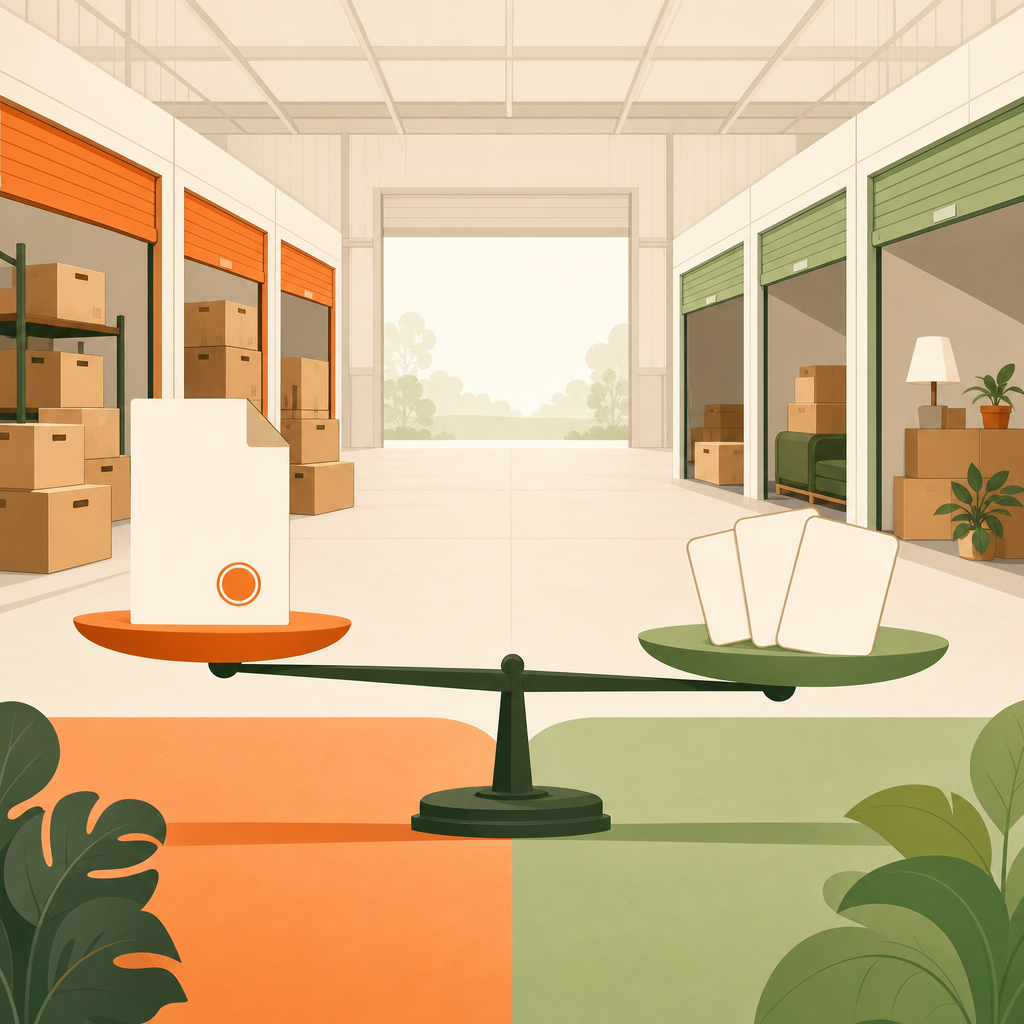
Your benchmark is the nearest commercial facility's rate for a comparable footprint, minus 30–50%. That discount is why renters choose a residential garage over a climate-controlled facility with a gate code. Undercut too little and you sit vacant; undercut too much and you have donated your square footage.
The Three Upgrades That Actually Matter
- A dedicated entrance or clear access path — renters will not tolerate coordinating entry through your kitchen.
- Basic shelving and a swept, dry floor — photos of clean racking rent spaces twice as fast as photos of bare concrete.
- A simple camera covering the access point — it protects both parties and cuts dispute risk to nearly zero.
Know Your Liability Line
Platform protection plans cover the renter's goods, not your structure. Confirm with your homeowner's insurer that incidental storage income does not void coverage — in most cases a rider costs under $100 a year. Skipping this call is the only genuinely dangerous mistake in an otherwise low-risk asset class.
The realistic math for a standard two-car garage bay in a metro suburb: $350–450 a month, roughly $4,800 a year, for approximately six hours of total effort after listing.