Here's the misunderstanding that catches operators off guard: liability doesn't automatically transfer to a co-host just because they handle day-to-day operations. If a guest is injured or the property is damaged, the asset owner often remains liable regardless of who was managing the booking. This article breaks down where liability actually sits between an owner and a co-host, what platform protection does and doesn't cover, and who needs their own co-hosting liability insurance.
This assumes you've already worked through rates and the agreement itself; this is specifically the insurance and liability layer. One caveat repeated throughout because it matters: coverage terms and liability defaults vary by platform, by state or province, and by the exact language in your co-hosting agreement, and must be confirmed with a licensed insurance professional and checked against your actual agreement — nothing here is universal.
Who Typically Remains Liable for What
Liability usually splits along a predictable line, though the specifics depend on your agreement and jurisdiction.
The asset owner typically remains liable for the property or vehicle itself — its condition, its safety, and its underlying ownership risks. Owning the asset generally means owning the baseline liability that comes with it, and that doesn't shift to a manager simply because they handle bookings. Guest injury from a property defect, for instance, most often traces back to the owner.
The co-host is typically liable for their own operational errors — mistakes they make in the course of managing. A co-host who mishandles a booking, gives wrong access instructions, or whose managed vendor causes damage may bear responsibility for that specific error, distinct from the owner's baseline asset liability.
The grey zone between these two is where disputes live, and it's why the agreement language and insurance coverage matter so much — the split isn't always clean, and "who caused this" can be genuinely contested after an incident.
What Platform Protection Does and Doesn't Cover
Most platforms offer some host guarantee — a protection program covering certain damage or liability scenarios, subject to specific terms and limits. Operators often assume this blankets everyone involved. It usually doesn't work that cleanly.
Platform protection is typically structured around the host account and the covered listing, with specific conditions and exclusions. Whether and how it extends to a co-host operating under the owner's account varies by platform and isn't something to assume — a co-host acting on the account may or may not fall within the protection's scope depending on the platform's terms and the nature of the incident.
Two things platform protection commonly doesn't do: cover a co-host's independent business liability (their own operational errors as a service provider), and replace proper liability insurance. Host guarantee-type coverage is generally damage-focused and limit-bound, not a substitute for liability coverage. Treat it as one layer, not the whole stack, and verify exactly what your platform's program covers rather than assuming it reaches every party and scenario. For property operators, the host insurance for short-term rental guide covers the broader coverage landscape.
When a Co-Host Needs Their Own Liability Insurance
The dividing line comes down to how much independent operational authority the co-host has.
A co-host running a real business — managing multiple properties, making pricing and vendor decisions, operating as an independent contractor — generally needs their own liability insurance. At that level they're a service provider with their own business risk, and relying on the owner's policy or platform protection leaves a real gap. Their own operational errors are their exposure to carry.
A co-host in a narrow, low-authority role (basic guest messaging under close owner direction, for example) may present less independent exposure, though "less" isn't "none," and this still warrants confirmation with an insurance professional rather than assumption.
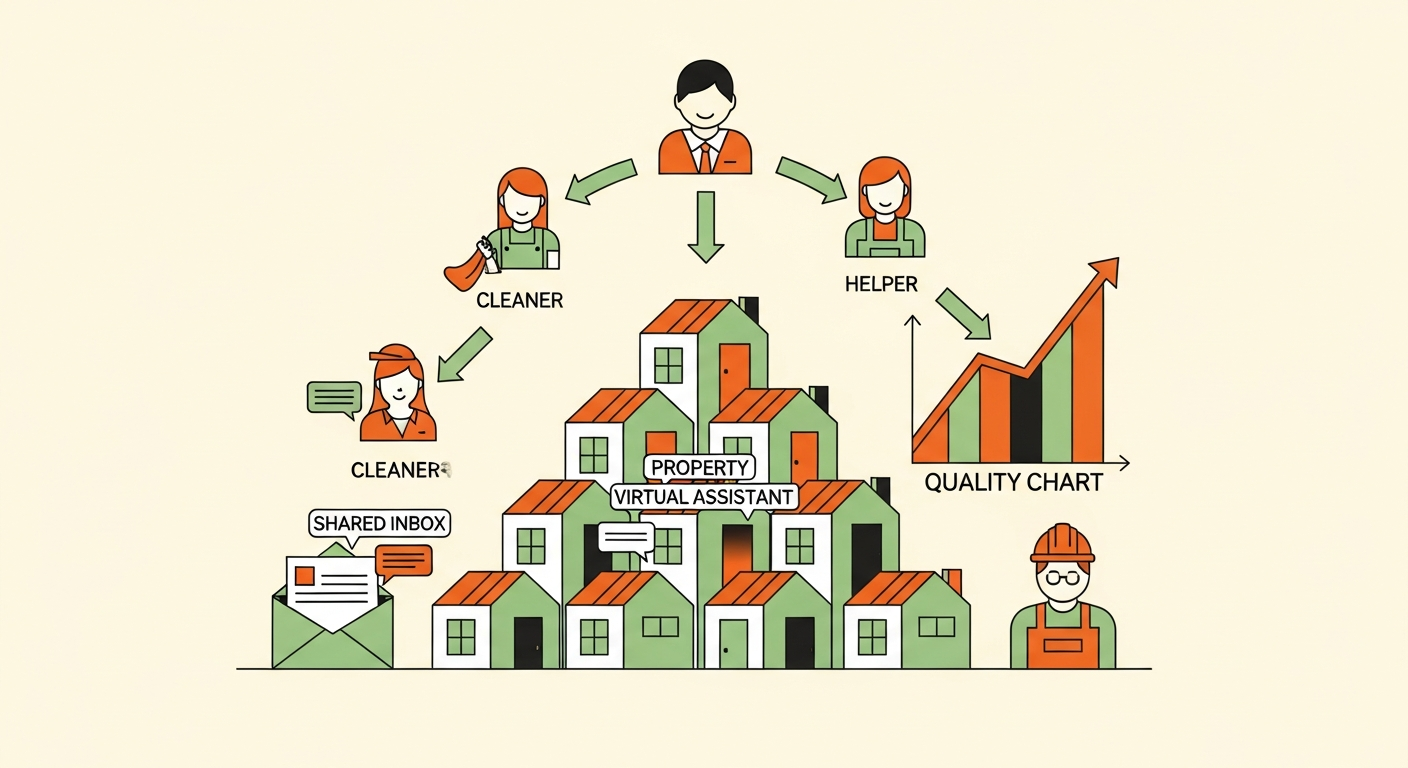
Where a co-host manages multiple owners' assets, an umbrella policy — coverage sitting on top of underlying policies to extend limits and fill certain gaps — is worth discussing with a broker, since the aggregate exposure across several arrangements can exceed what any single underlying policy handles. A sharing economy insurance broker who understands co-hosting specifically is better positioned to structure this than a generic commercial broker.
The Liability Responsibility Matrix
The table below shows general patterns only — confirm each against your agreement, your platform's terms, and a licensed insurance professional, since real outcomes depend on specifics.
| Incident Type | Who Typically Bears Liability | Coverage That May Apply |
|---|---|---|
| Guest injury from property/vehicle defect | Usually the asset owner | Owner's liability policy; platform protection may apply within limits |
| Property damage by guest | Often owner's exposure to claim | Platform host guarantee (limit-bound); owner's policy |
| Co-host operational error (wrong access, pricing mistake causing dispute) | Usually the co-host | Co-host's own liability coverage |
| Damage by co-host's managed vendor (e.g. cleaner) | Contested; often traces to co-host who engaged them | Co-host's coverage; vendor's own insurance if any |
| Guest dispute over co-host handling | Usually the co-host operationally | Co-host's coverage; agreement indemnification terms |
That fourth row — a co-host's cleaning vendor damaging the property — is one of the most commonly contested real scenarios, precisely because responsibility can plausibly land on the vendor, the co-host who hired them, or the owner, depending entirely on the agreement and coverage in place.
Why This Belongs in the Agreement, Not Left to Assumption
Liability assumptions are the single biggest blind spot in informal co-hosting arrangements — a bigger one than payment, because payment disputes surface quickly while liability gaps stay invisible until an incident forces the question at the worst possible moment.
The co-hosting agreement should explicitly address who carries what coverage and who is responsible for what, including indemnification — a contractual promise by one party to cover certain losses the other incurs. Without an indemnification clause and clear coverage responsibilities, a co-host's mistake causing damage becomes an unfunded argument: real loss, no agreed answer for who pays.
This is why the insurance layer shouldn't be separated from the co-hosting agreement legal template — the two are the same conversation. Coverage responsibility is a term to negotiate alongside rate, and part of any serious co-hosting contract negotiation. The Airbnb co-hosting rates guide makes the connected point that a co-host taking on more liability generally justifies a higher rate, so the two decisions should be made together.
Common Gaps That Surface Only After an Incident
The uninsured co-host error. A co-host makes an operational mistake causing damage, has no liability coverage, and the agreement never said who pays. The loss sits unfunded while both parties argue.
The vendor-damage gap. A co-host's cleaner or contractor damages the property, and no one confirmed whether that vendor carried insurance or who absorbs the loss if they didn't.
The assumed-platform-coverage gap. Both parties assumed the platform's host guarantee covered a scenario it excluded, discovering the exclusion only when the claim is filed.
The scope-mismatch gap. The co-host operated with more authority than the agreement's liability terms accounted for, so an incident falls into an undefined space. This connects to co-hosting tax implications too, since how independently a co-host operates affects both their liability exposure and their tax classification.
Every one of these is preventable before an incident and expensive after. Confirming coverage and codifying responsibility in the agreement is far cheaper than litigating an unfunded loss.
Frequently Asked Questions
If my co-host manages everything, are they liable when something goes wrong?
Not automatically. Managing day-to-day operations doesn't transfer the owner's baseline liability for the asset itself. A co-host is typically liable for their own operational errors, but the owner often remains liable for the property or vehicle. The exact split depends on your agreement and jurisdiction.
Does Airbnb's host guarantee cover my co-host?
Not necessarily in the way you'd assume. Platform protection is structured around the host account and listing with specific terms and limits, and how it extends to a co-host varies. Confirm the platform's actual terms rather than assuming it covers every party and scenario.
Does my co-host need their own insurance?
Usually yes if they operate as an independent business with real decision-making authority across one or more properties. Their own operational errors are their exposure, which the owner's policy and platform protection may not cover. Confirm with an insurance professional.
Who pays if my co-host's cleaner damages the property?
It's one of the most contested scenarios. Responsibility can land on the vendor, the co-host who hired them, or the owner, depending on the agreement and what coverage exists. Address vendor liability explicitly in the agreement so it isn't an open question after the fact.
How do I make sure liability is handled correctly?
Address it explicitly in the co-hosting agreement with clear coverage responsibilities and an indemnification clause, confirm platform terms, and have both coverage setups reviewed by a licensed insurance professional. Don't leave any of it to assumption.
The Takeaway
Co-hosting liability insurance comes down to one principle: liability doesn't follow the day-to-day work automatically, so coverage and responsibility have to be assigned deliberately rather than assumed. The owner typically retains asset-level liability while the co-host carries their own operational errors — but the only way to make that split reliable is to codify it in the agreement, confirm platform coverage, and verify every party's insurance with a licensed professional before anything goes wrong.