Smart home devices pay for themselves through specific, measurable mechanisms -- labor saved on check-in, fines avoided, call-outs prevented -- not through vaguely "improving the guest experience." Knowing which mechanism applies to a given device is what determines whether it's actually worth buying. The Airbnb smart home ROI calculator puts a payback period on each purchase so you can prioritize instead of guessing.
How Smart Home Devices Actually Generate ROI
Three mechanisms account for nearly all real returns on this hardware. If a device you're considering doesn't hit one of them, it probably isn't paying for itself.
Labor time saved on check-in. A smart lock removes the need to meet guests or hand off keys. That's turnover labor -- the hands-on time each booking demands from you or someone you pay -- eliminated on every single stay. Because it recurs per booking, it compounds fast at decent occupancy.
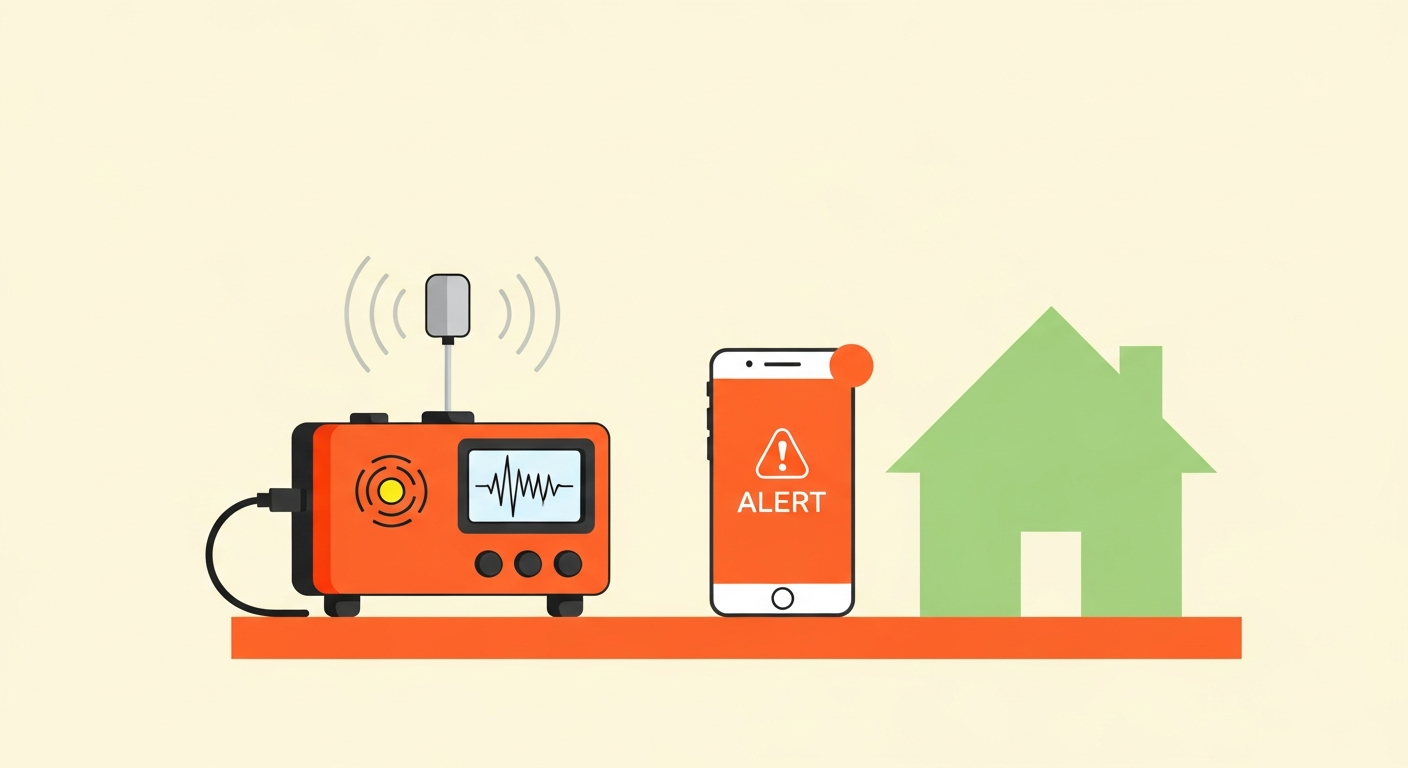
Reduced noise complaint and fine risk. A noise monitor catches an issue before it becomes a neighbor complaint, a fine, or a violation. The return here isn't per-booking labor; it's avoided low-frequency, high-cost events.
Fewer maintenance call-outs. A smart thermostat or sensor that catches a problem early prevents an emergency call-out and the damage that comes with it.
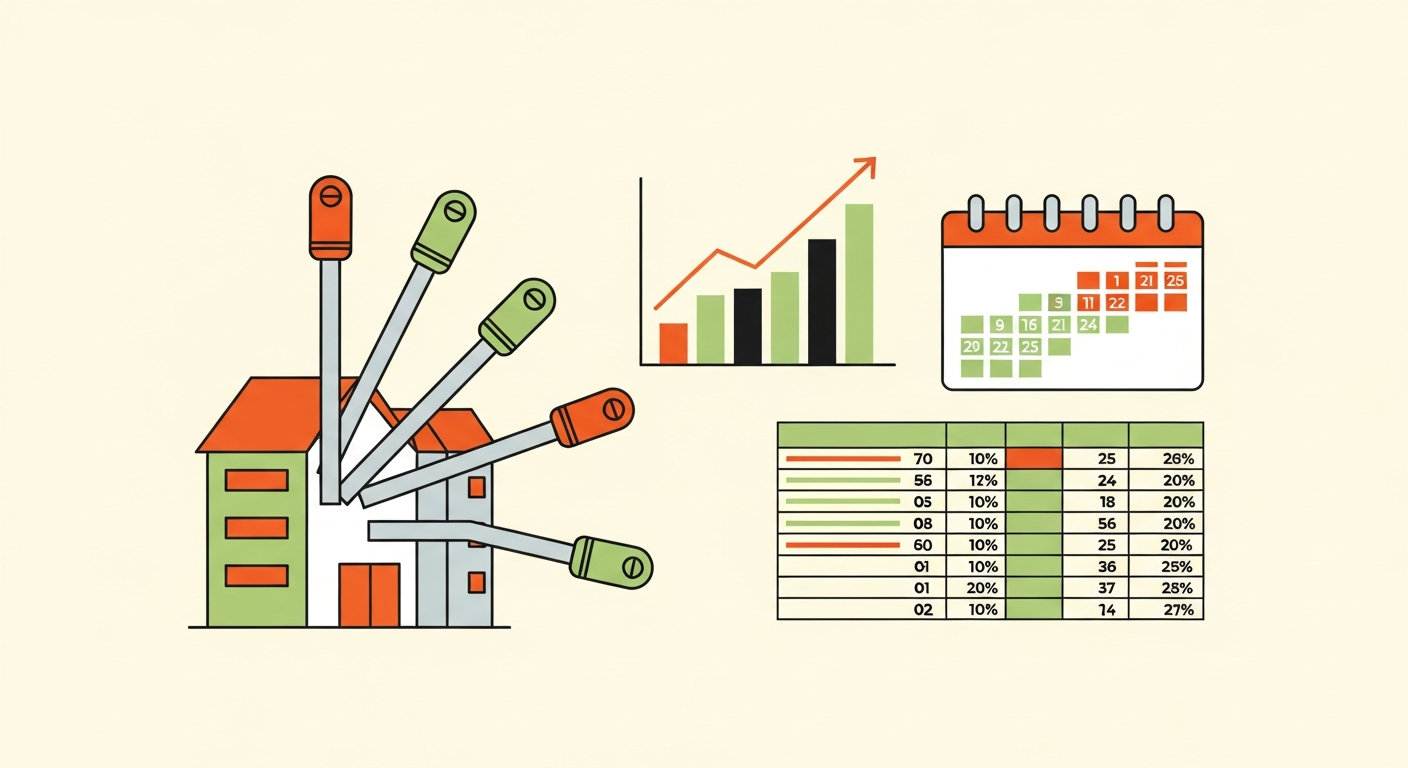
Notice how differently these behave. Per-booking labor savings scale directly with occupancy rate -- the share of available nights actually booked. Risk-reduction savings don't; they depend on how likely the bad event is in the first place. That difference is why a blanket "upgrade everything" approach overspends: it treats devices with completely different return profiles as if they were the same purchase.
What the Calculator Needs From You
- Device cost. Hardware, plus any hub, subscription, or installation cost -- the real total, not the sticker price.
- Expected savings per booking (or per year). Time saved per turnover, or the estimated cost and likelihood of the event the device prevents.
- Occupancy rate. Critical, since per-booking savings only materialize when the property is actually booked.
Reading the Payback Period
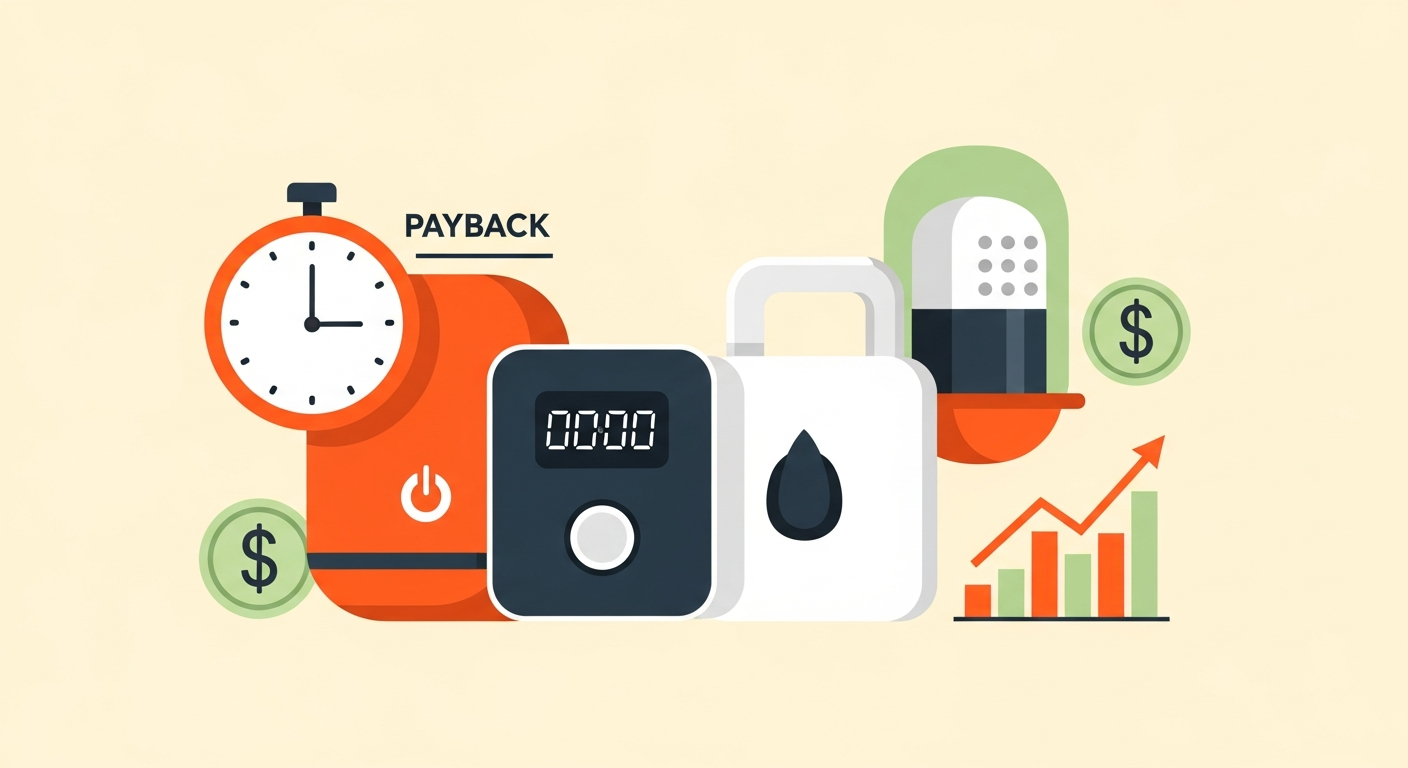
Payback period is how long until a device's savings equal its cost. Shorter is better, and the ranking across your candidate devices tells you what to buy first.
Buy in payback order. The device that pays back fastest at your occupancy is the one to purchase now; the one with a two-year payback can wait. Across a portfolio, this usually means rolling out one device type everywhere before adding a second type anywhere -- the fastest-paying device deployed across five properties beats a mixed bag deployed unevenly.
A Worked Example
Two devices at a given occupancy rate, illustrative only:
| Device | Return Mechanism | Behavior at Higher Occupancy | Typical Payback Profile |
|---|---|---|---|
| Smart lock | Turnover labor saved per booking | Payback accelerates -- more bookings, more savings | Usually shortest; often the clear first buy |
| Noise monitor | Avoided fine/complaint risk | Roughly flat -- depends on event likelihood, not booking count | Longer and less predictable; depends on your risk exposure |
At healthy occupancy, the smart lock's per-booking savings usually pay it back well before the noise monitor pays back its risk-reduction value. But in a property with real noise-complaint exposure -- a strict jurisdiction, a party-prone location -- the monitor's avoided-fine math can flip the ranking entirely. That's why you run your own numbers instead of copying someone else's device list. The Airbnb smart lock comparison and Airbnb noise monitoring device guides cover choosing the right hardware for your setup.
FAQ
Does it account for maintenance and replacement cost over time?
Include those in your device cost input for an accurate picture -- batteries, replacement cycles, and any ongoing subscription all belong in the total. The tool models what you give it, so a hardware-only figure will understate real cost and flatter the payback.
Does it work across a multi-property portfolio?
Yes. Run each property's occupancy and savings, since payback varies by property. A device that pays back quickly at a high-occupancy unit may not at a slower one, which is exactly the kind of difference a blanket rollout misses.
Does it factor in guest experience intangibles?
No, and it doesn't pretend to. It estimates payback from the inputs you provide and can't capture review impact, guest satisfaction, or convenience. Those are real -- but they're a reason to override a payback ranking deliberately, not a reason to skip running the numbers.
Run Your Numbers
Before you buy anything, run the device and your property's occupancy through the Airbnb smart home ROI calculator and buy in payback order. It's the step that keeps smart home spend tied to returns rather than enthusiasm -- and it pairs directly with the sequencing logic in the Airbnb host automation stack guide.