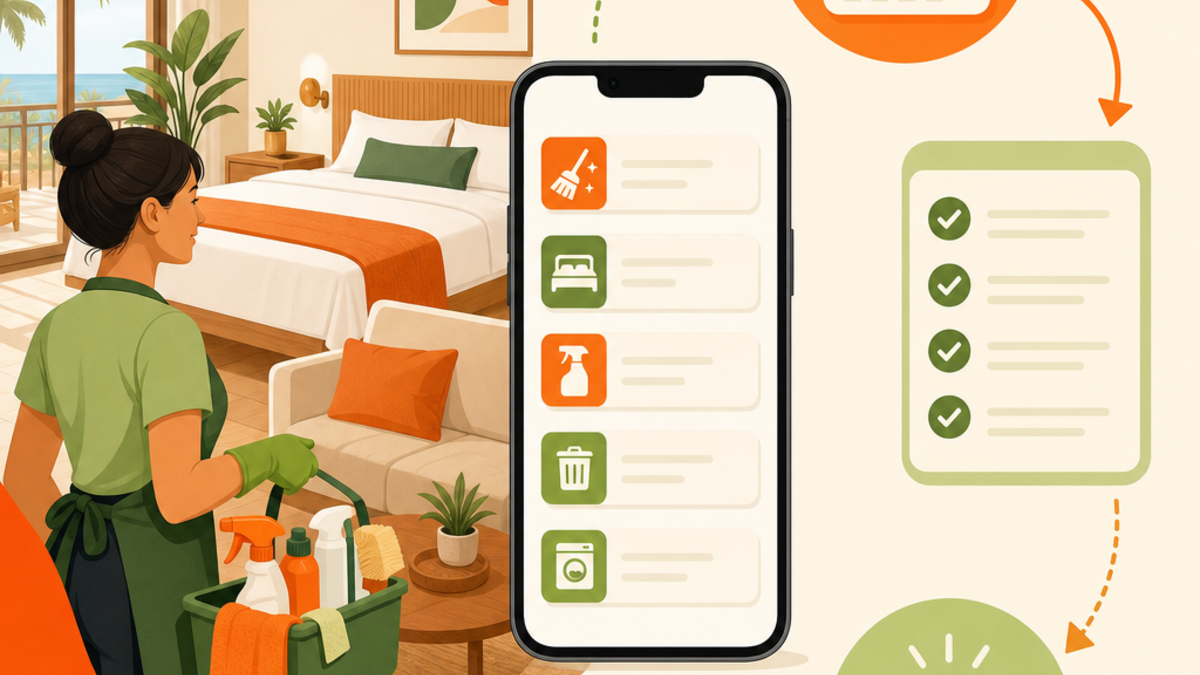
The core problem turnover cleaning software solves isn't scheduling. It's a specific coordination failure: a cleaner doesn't know a checkout happened, or a next guest arrives before anyone actually confirmed the clean is done. That gap -- between a checkout occurring and someone verifying the property is genuinely guest-ready -- is exactly what this kind of system exists to close. This article covers what automated turnover coordination actually does, how to build the same reliability manually if you don't need dedicated software yet, and where the real inflection point sits.
This assumes you've read the Airbnb host automation stack piece. This goes deeper specifically on the cleaning coordination layer.
What Automated Turnover Coordination Actually Does
Strip away the marketing language and turnover coordination software does three connected things, in sequence.
Triggers a cleaning task automatically when checkout is confirmed. The turnover trigger is the event -- checkout time passing, or a checkout confirmation signal from the booking platform -- that starts the cleaning process without a host manually noticing and texting someone.
Notifies the assigned cleaner. The cleaner receives the task automatically, tied to the specific property and the specific checkout that just happened, rather than depending on the host remembering to reach out.
Gets confirmation the clean is actually complete before the next check-in window. This is the step that closes the exact gap described above -- a positive signal that the cleaning happened and the property is ready, checked against the next guest's arrival time, rather than everyone simply assuming it's fine.
The value isn't any one of these steps individually -- it's that they're chained together reliably, so a checkout automatically becomes a completed, verified clean without a host having to personally hold the whole sequence in their head for every property, every day.
How This Connects to Calendar and Booking Data
The trigger step only works if it's wired into real booking data, not running on a schedule someone set up once and forgot about.
Real-time or near-real-time checkout confirmation. The system needs to know a checkout actually happened -- ideally from the booking platform's own confirmation, not just an assumed checkout time that may not reflect reality if a guest left early or stayed slightly late.
Next check-in awareness. The system needs to know when the next guest arrives, so it can flag urgency correctly -- a same-day turnover with a three-hour buffer is a different priority than a turnover with two full days before the next guest.
No manual host intervention required for the trigger itself. This is the whole point. If the host still has to notice the checkout and manually kick off the process, you haven't actually automated the failure point -- you've just added a notification on top of the same manual step.
Verify any tool's actual integration depth against current vendor documentation before relying on it -- integration capabilities and reliability vary and change over time, and a tool that claims real-time sync but actually polls on a delay leaves the exact gap this system is supposed to close.
Dedicated Software vs. a Lighter Manual System
Not every operator needs dedicated tooling for this, and building a well-structured manual system with clear communication protocols can genuinely work at smaller scale.
What a dedicated tool adds: automatic triggering tied to real booking data, structured notifications, built-in confirmation and photo verification, and a single dashboard across multiple properties and cleaners. This matters most as the coordination load grows -- more properties, more cleaners, more simultaneous same-day turnovers to track.
What a well-structured manual system can cover: a consistent, documented process -- a specific person notified through a specific channel, a checklist the cleaner confirms against, and a defined confirmation step -- can deliver the same reliability at small scale, provided it's actually followed consistently rather than improvised turnover by turnover.
The real distinguishing question: it's not "software vs. no software," it's "does a reliable trigger-notify-confirm sequence exist, consistently, regardless of how it's implemented." A disciplined manual system that always fires can outperform a poorly configured software tool that sometimes doesn't. The mechanism matters more than the medium.
Handling Same-Day Turnovers
Same-day turnovers -- checkout and the next check-in on the same calendar day, often with a tight buffer -- are where a coordination system gets tested hardest, and where failures are most visible and most damaging.
Why these are higher-risk. A tight buffer means less slack for anything to go wrong -- a cleaner running late, a checkout happening later than expected, an unexpected issue found during cleaning. There's little room to absorb delay before the next guest arrives to an unready property.
Flag same-day turnovers distinctly. Whether through software priority flagging or a manual "same-day" marker in your own system, these turnovers deserve explicit, elevated attention rather than being treated identically to a turnover with a full day's buffer.
Confirm completion earlier for tight-buffer turnovers. Build in an earlier check-in point with the cleaner specifically for same-day turnovers, so a problem surfaces with enough time to respond -- calling a backup cleaner, adjusting the next guest's check-in time if genuinely necessary -- rather than discovering an issue right as the next guest is arriving.
Have a real escalation plan specifically for this scenario, covered in detail below, since same-day turnovers are exactly when an escalation plan gets used, not a theoretical scenario.
Building Accountability Into the System
A trigger and a notification aren't enough on their own -- the system needs a real accountability layer, or "the cleaner was notified" quietly becomes the whole verification process by default.
Checklists the cleaner follows and confirms. A specific, itemized checklist -- not a vague "clean the property" instruction -- that the cleaner works through and confirms complete, ideally per item rather than as one blanket confirmation at the end.
Photo confirmation of completed cleaning. Photos of key areas (kitchen, bathroom, living space, any specific recurring problem spots) submitted as part of the completion confirmation. This does two things: it gives you a real verification signal rather than just trusting a "done" message, and it creates a record if a guest later disputes cleanliness.
A genuine confirmation step, not just a notification sent. The difference matters: a notification tells the cleaner there's a job. A confirmation tells you the job is actually finished. Systems that only handle the first half leave the exact verification gap this whole article is about wide open.
Whether this runs through dedicated software or a manual routine (a photo texted against a checklist you review), the accountability layer is what actually prevents the failure mode -- not the trigger and notification alone.
The Cleaning Coordination Checklist
This works whether implemented through software or manually:
- Trigger -- a defined event (checkout confirmed) that reliably starts the process, without requiring the host to notice and act manually.
- Notification -- the assigned cleaner is notified automatically or through a consistent, defined channel, tied to the specific property and checkout.
- Checklist -- a specific, itemized list of what the cleaning covers, provided to the cleaner every time, not assumed known.
- Confirmation -- the cleaner confirms completion, ideally with photo evidence against the checklist items.
- Verification -- someone (the host, or the system) checks the confirmation against the next check-in window before considering the property ready.
- Escalation plan -- a defined fallback if confirmation doesn't arrive in time or the cleaner is unavailable, covered next.
Every one of these six steps needs to exist, reliably, regardless of whether you're running software or a well-disciplined manual routine.
Worked Scenario One: A Manual System for 1-2 Properties
A host running one or two properties personally, no dedicated software.
The setup: the host has one primary cleaner with a standing arrangement. On checkout, the host sends a consistent text template (same format every time) confirming checkout happened and the next check-in time. The cleaner works from a written checklist kept in the property (or shared once, referenced every time). On completion, the cleaner sends a confirmation text with a couple of photos of key areas.
Why this works at this scale: the coordination load is genuinely light -- one or two properties, one cleaner, a relationship with established trust and a consistent routine. The manual system delivers the same trigger-notify-checklist-confirm sequence dedicated software would, just executed by the host personally rather than automated.
What makes it reliable rather than fragile: consistency. The same template, the same checklist, the same confirmation expectation every single time -- not improvised turnover by turnover based on whatever the host remembers to say. That consistency is what separates a well-structured manual system from informal text coordination that happens to work until it doesn't.
Worked Scenario Two: Where Dedicated Software Becomes Worth It
A host running six properties with three different cleaners, some properties sharing cleaners, frequent same-day turnovers.
Where the manual approach breaks down: with three cleaners and six properties, the host is now personally tracking which cleaner is assigned to which checkout, confirming each individually, and managing several same-day turnovers simultaneously across different properties. The coordination load has outgrown what one person can reliably hold in their head or manage over scattered text threads without something eventually slipping.
What dedicated software adds here: automatic triggering across all six properties tied to real booking data, per-cleaner assignment routing so the right person is notified without the host manually deciding each time, a single dashboard showing turnover status across the whole portfolio, and structured photo confirmation logged per property rather than scattered across individual text threads with different cleaners.
The read: this is the inflection point -- multiple properties, multiple cleaners, and enough same-day turnover volume that manual tracking genuinely risks a missed handoff. The software isn't adding a capability that wasn't needed before; it's replacing a manual coordination load that's become unreliable at this scale, connecting naturally to broader Airbnb multi-unit management software thinking once you're at this size.
Common Mistakes
Relying on informal text-message coordination that breaks down at scale. Works fine for one or two properties with one cleaner; becomes unreliable fast once properties, cleaners, or same-day turnover frequency grow. The informal system that worked at small scale doesn't fail gracefully -- it just starts missing things without obvious warning.
No clear escalation plan when a cleaner is unavailable or late. Discovering there's no fallback plan exactly when you need one -- a cleaner cancels last minute, a same-day turnover is at risk -- is a preventable crisis. Build the escalation plan before you need it, not during the emergency.
No verification step to confirm a clean actually happened. Treating "the cleaner was notified" as equivalent to "the property is ready" skips the entire accountability layer this article covers. A notification sent is not confirmation received.
Treating same-day turnovers identically to turnovers with a full buffer. Same-day turnovers carry meaningfully more risk and deserve distinct, elevated attention -- earlier check-ins, tighter monitoring -- not the same relaxed handling as a turnover with a full day's slack.
Assuming software solves coordination problems a disorganized process created. Software automates a defined process; it doesn't invent one for you. Adding a tool on top of an undefined or inconsistent manual routine just automates the inconsistency faster.
What to Skip: When Dedicated Software Is Overkill
Be honest about the case against it: a single property with one reliable, long-term cleaner and a simple, well-established communication routine may not need dedicated software at all.
If you've got one property, one cleaner you've worked with reliably for a while, and a consistent routine that's never actually broken down, adding software here can create more overhead than it saves -- another tool to configure, another login, another system to maintain for a coordination load that a text template and a standing relationship already handle well. The failure mode this article is built around (a missed handoff, an unverified clean) simply isn't a live risk in a setup this simple and this proven.
The trigger to reconsider isn't a fixed property count -- it's whether your current system has actually shown cracks: a missed notification, a confirmation that didn't happen, growing coordination load as you add a property or a cleaner. Until you see that strain, a disciplined manual system is a legitimate, sufficient choice, not a lesser one.
Frequently Asked Questions
How do I handle backup cleaner coverage when a primary cleaner cancels last minute?
Have a backup cleaner identified and briefed on your checklist and expectations before you need them, not scrambled together during a crisis. This is exactly what an escalation plan should specify: who gets contacted, in what order, when the primary cleaner doesn't confirm by a defined deadline ahead of the next check-in. Without this identified in advance, a last-minute cancellation becomes a genuine emergency instead of a defined fallback step.
Does photo-based confirmation actually reduce disputes about cleaning quality?
Generally yes, for the same reason photo documentation helps in other contexts -- it creates an objective record of condition at a specific point in time, rather than relying on the cleaner's word or the host's memory. It doesn't eliminate every dispute, but it gives you something concrete to point to if a guest reports a cleanliness issue, and it also gives you a real basis for addressing a cleaner's performance if photos consistently show gaps against the checklist.
What should my escalation plan actually specify?
Who to contact and in what order if the primary cleaner doesn't confirm by a defined deadline, what the deadline is relative to the next check-in (earlier for same-day turnovers), and what happens if no backup is available in time -- including, as a last resort, whether and how you'd need to contact the incoming guest about a delay. Write this down before you need it; improvising an escalation plan during an actual emergency is much worse than having one ready.
Is it worth paying for dedicated software for just two properties if I have multiple cleaners?
Possibly, if multiple cleaners is the actual complexity driver rather than property count -- coordinating assignment and confirmation across several cleaners, even for a small number of properties, can strain a manual system faster than property count alone would suggest. Evaluate based on real coordination load (how many simultaneous relationships and handoffs you're tracking), not purely on property count.
How does this connect to my broader guest experience system?
Turnover cleaning readiness is a direct input into guest experience -- a guest arriving to a property that wasn't properly confirmed clean is one of the worst possible starts to a stay, and it's a preventable one. This connects directly to your broader Airbnb guest experience checklist thinking, since cleaning coordination reliability is foundational to everything else in the guest experience working well.
Should cleaning coordination integrate with my pricing or revenue tools?
Not directly, but indirectly it matters -- reliable turnover coordination is what makes tighter minimum-stay and back-to-back booking strategies (covered in Airbnb revenue management tools) actually safe to run. A host confident in their turnover system can accept tighter same-day bookings that a host with an unreliable cleaning process would be wise to avoid.
Can I start manual and move to software later without disruption?
Yes, and it's a reasonable path -- a well-structured manual system (consistent trigger, clear checklist, defined confirmation) translates naturally into a software-based version of the same process once you need it. Starting manual also means you've already defined what the process should actually do before you go shopping for a tool to do it, which produces a better software choice than adopting a tool first and figuring out your process around its defaults.
The Takeaway
Airbnb turnover cleaning software exists to close one specific gap: the coordination failure where a checkout happens and a next guest arrives before anyone confirmed the property is actually clean and ready. Whether you close that gap with dedicated software or a disciplined manual routine, the same six-step sequence has to exist reliably -- trigger, notification, checklist, confirmation, verification, and escalation plan. Start with a manual system if your scale supports it, and move to dedicated software once multiple properties or multiple cleaners make that manual coordination genuinely unreliable rather than just busier.